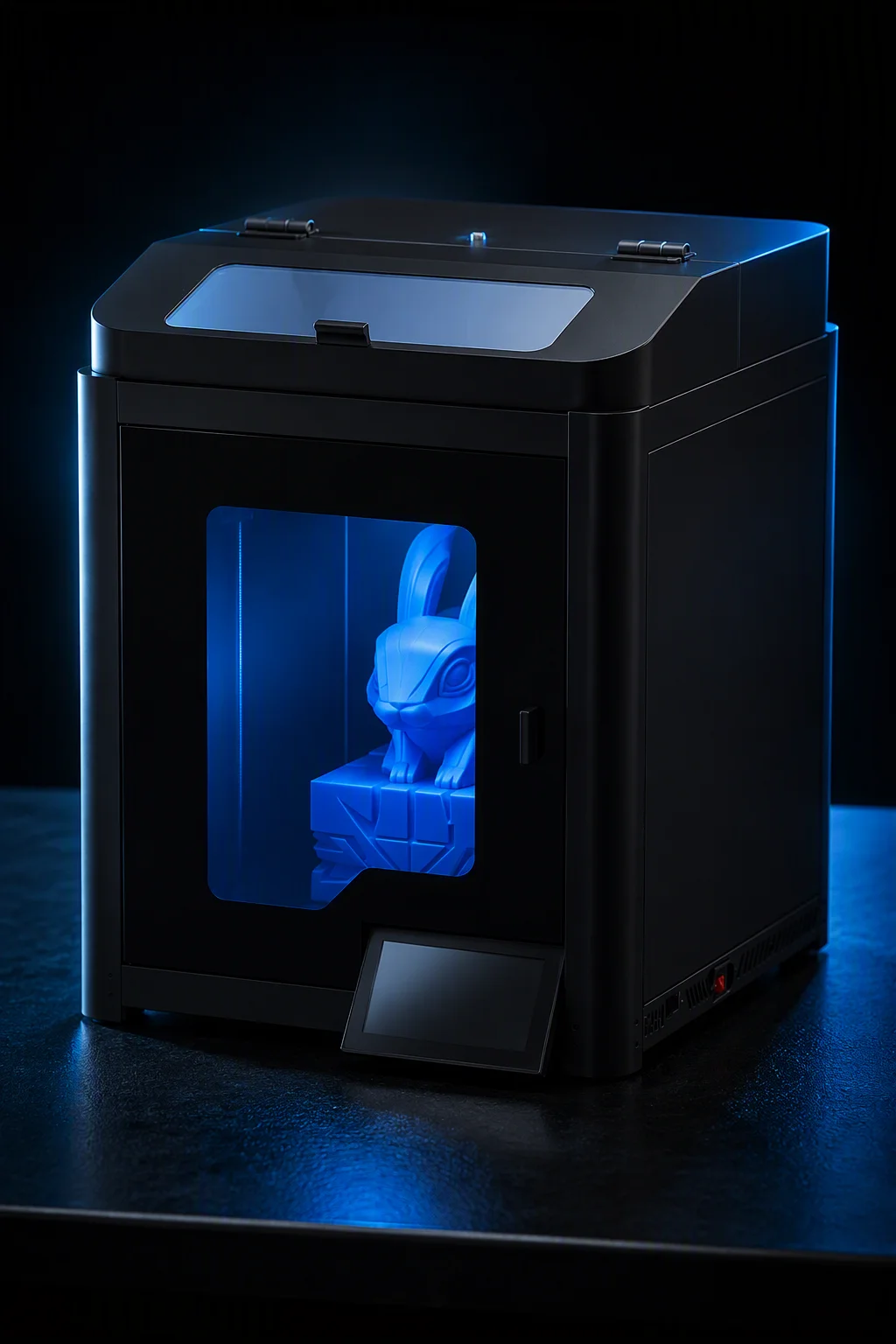
Factory Tour
Where Precision
Meets Production
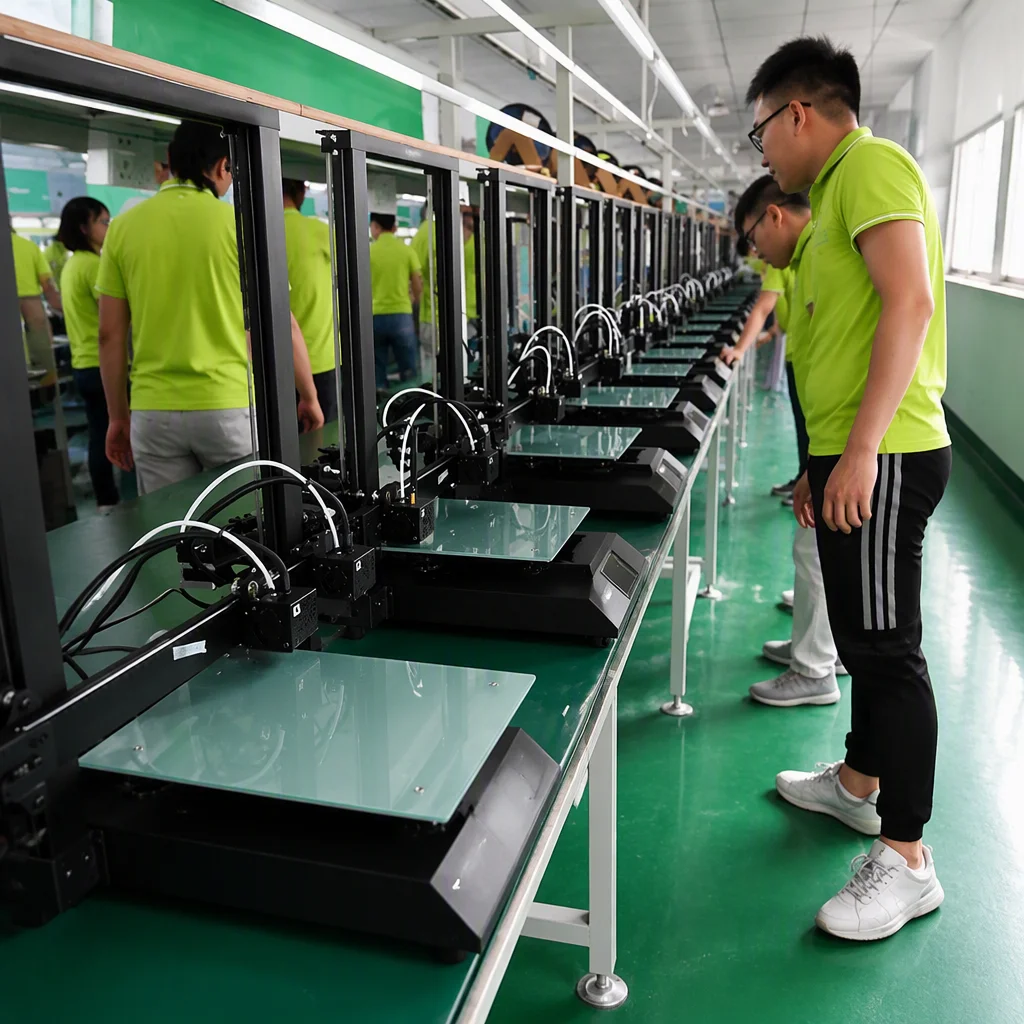
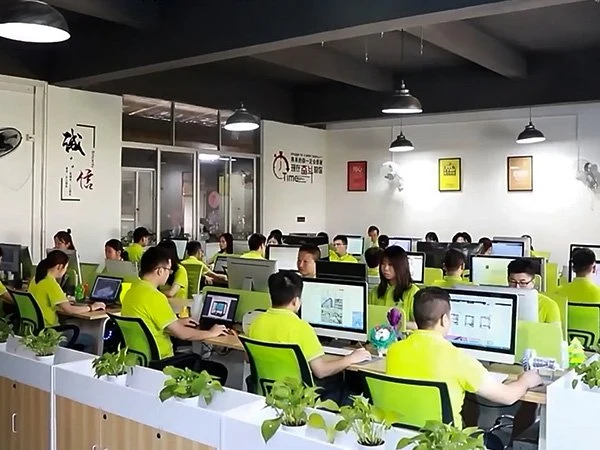
3,500 sqm of production space in Shenzhen, China — a verified manufacturing network running four general-purpose assembly cell groups plus a dedicated burn-in line. From frame fabrication to the final print test, every unit is built, powered up, and test-printed before it is packed.
Production Floor
General-Purpose Cells, One Dedicated Burn-In Line
Instead of fixed lines locked to one product tier, the floor is organized as flexible assembly cell groups that can be retooled for any product family crossing the target schedule, backed by a dedicated aging-and-testing line that no unit skips.
Mechanical Assembly Cells
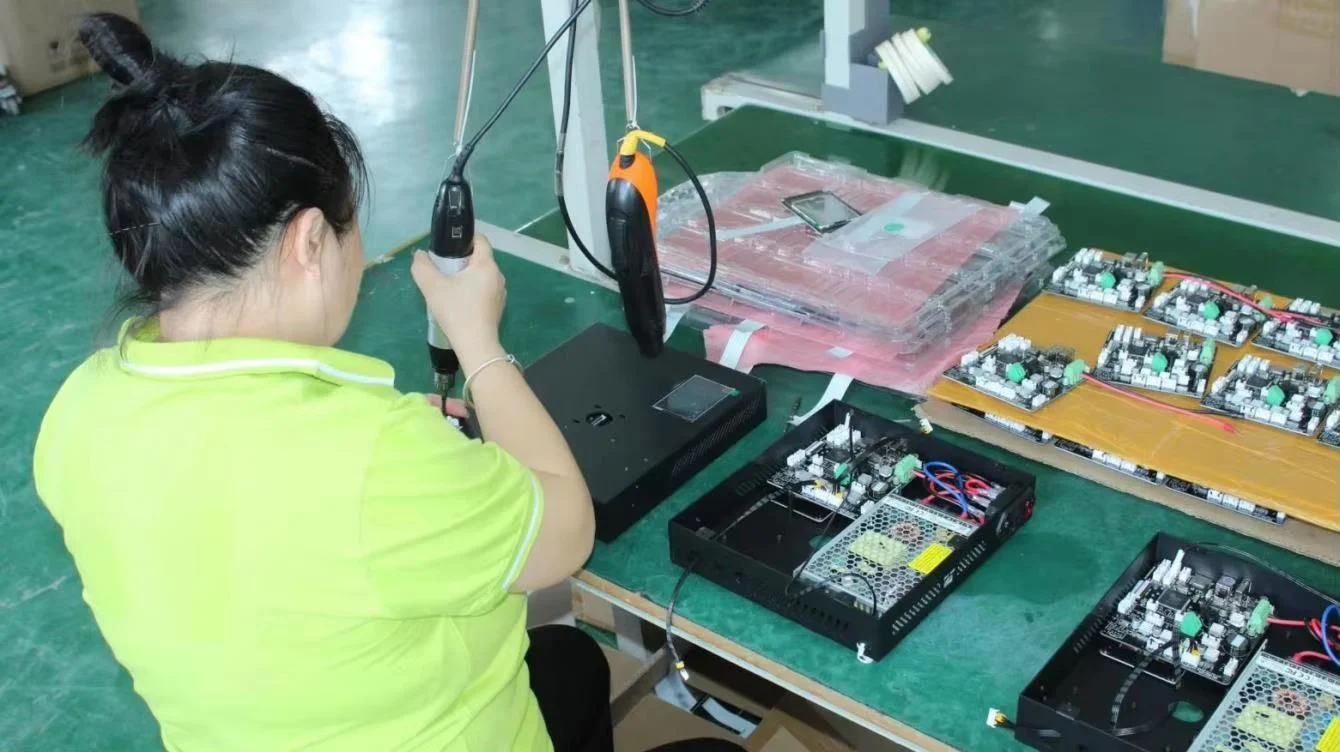
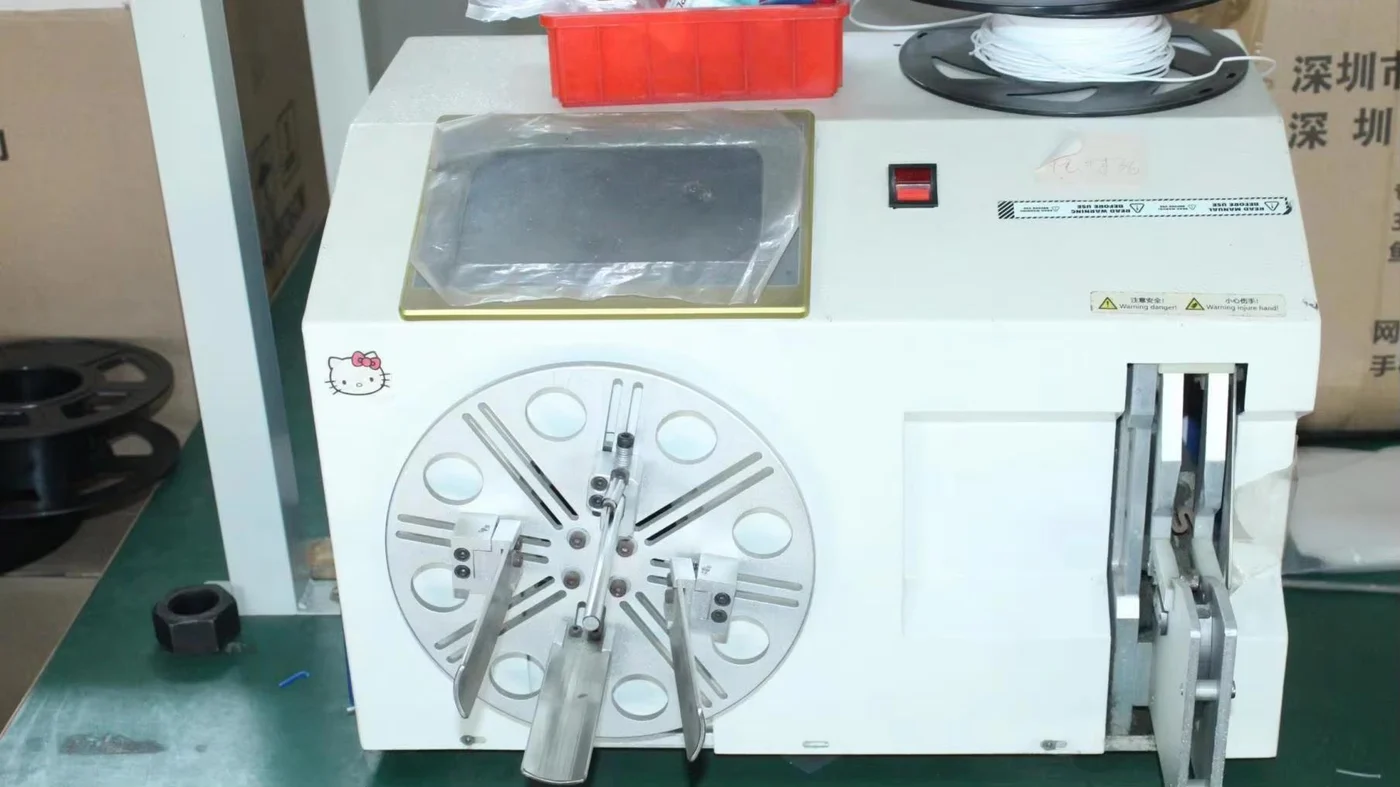
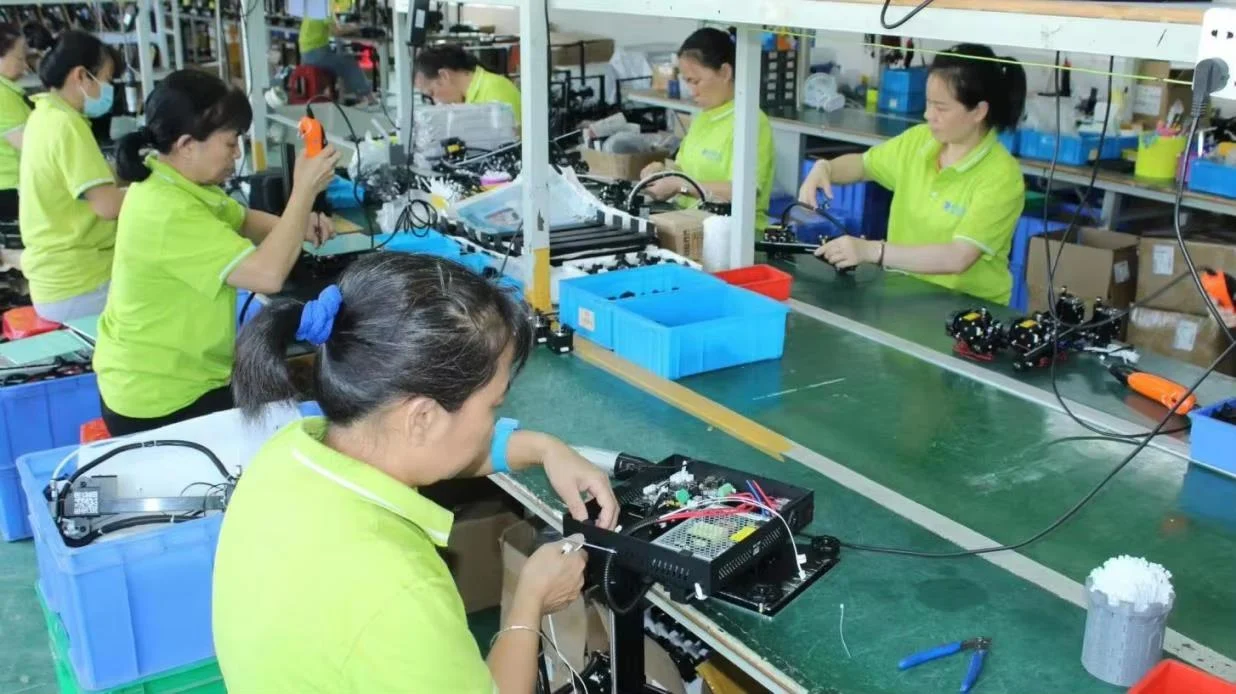
Frame fabrication, motion system build-up, and wiring harness assembly. Wire-winding stations and fixture-mounted torque procedures keep every sub-assembly consistent — and because the cells are general-purpose, the floor re-tools between product families without idle capacity.
PCBA Test & Firmware Bay
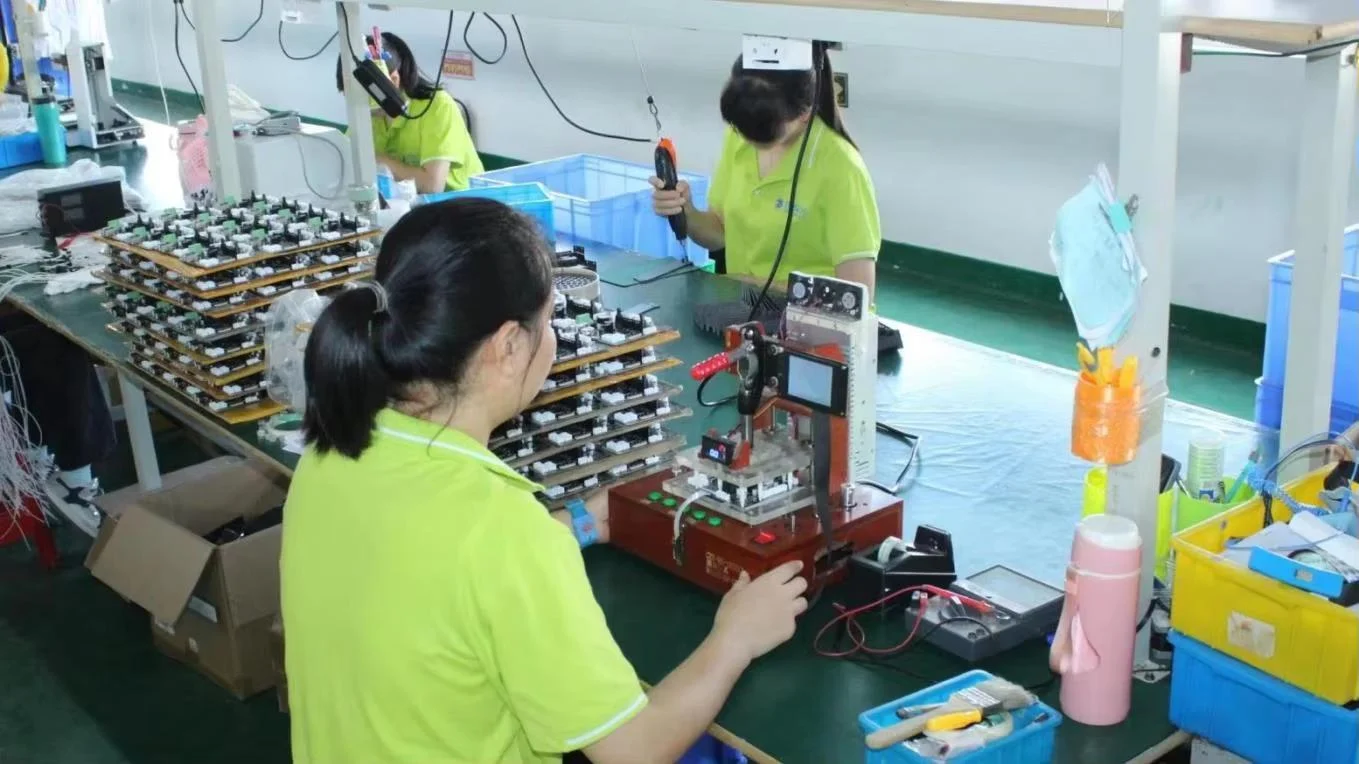
Controller boards pass through a dedicated PCBA testing station before they enter assembly: power-on checks, channel verification, and firmware load. Tested-then-installed means an electronics fault is caught before it becomes a finished-machine rework.
Dedicated Burn-In & Aging Line
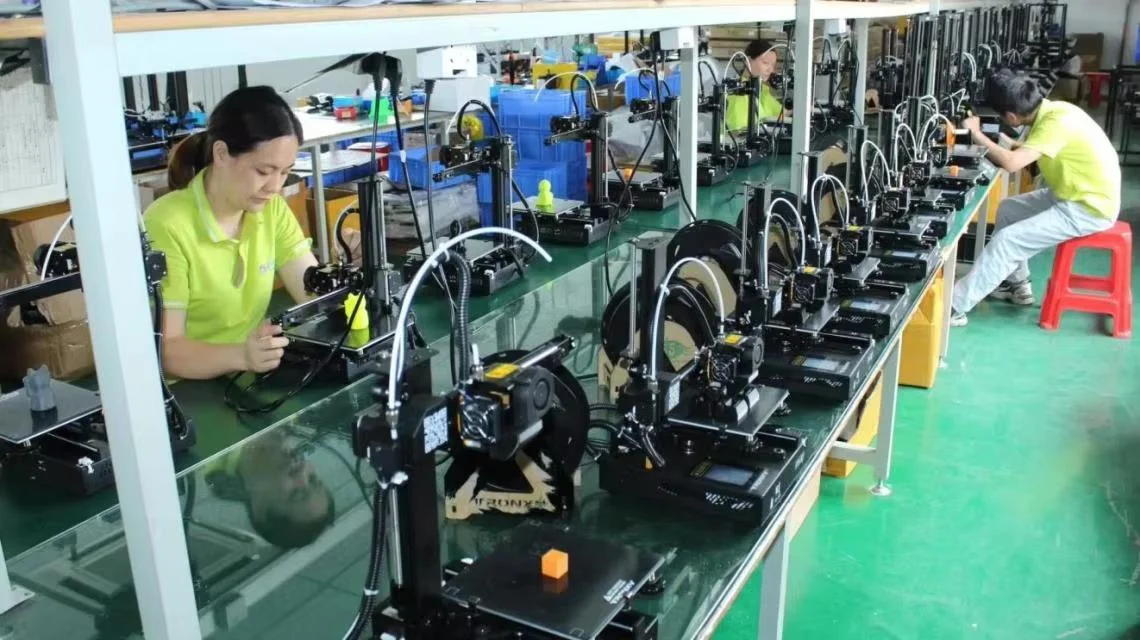
The line no unit skips: every finished printer is powered up, settled on the bench, and run through a standardized test print. The aging-and-testing area runs continuously across the schedule — this is the gate where a print flaw or power fault is caught before a carton, not after a sale.
Equipment & Technology
Tooled for Build and for Test
The floor splits into two capabilities: fabrication and electronics work that make the machine, and a testing setup that proves it. Both run under one roof with shared documentation.
Fabrication & Machining
Frame components, brackets, and gantry plates are machined on CNC processing equipment within the network. Cutting and fabrication checks, plus inspection at the receiving stage, keep structural parts consistent batch to batch.
Electronics Assembly & PCBA Testing
Controller boards are populated on the electronics benches and verified at the PCBA testing station before the chassis is closed. Wiring harnesses are built at winding stations with length-matched leads and continuity checks along the way.
Burn-In & Print Test Bay
A dedicated testing area where every production unit is powered and run through a standardized test print before packing. The aging-and-testing bench is the final gate — it exists for every unit, not for a sample.
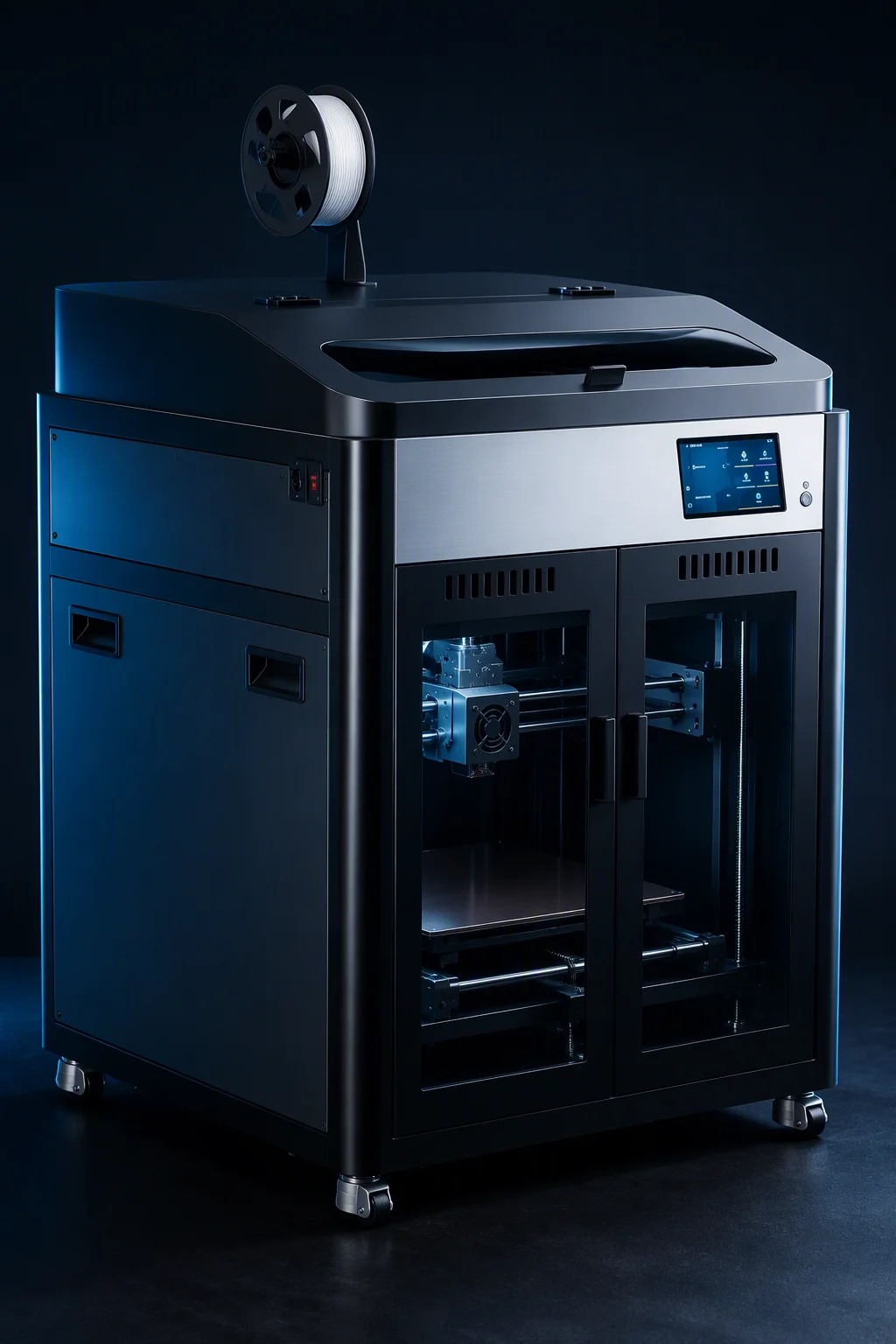
Assembly Process
Six Stages to a Finished Printer
Every Precise3D printer passes through six controlled stages under standardized work instructions, with operator sign-off and printed records along the way.
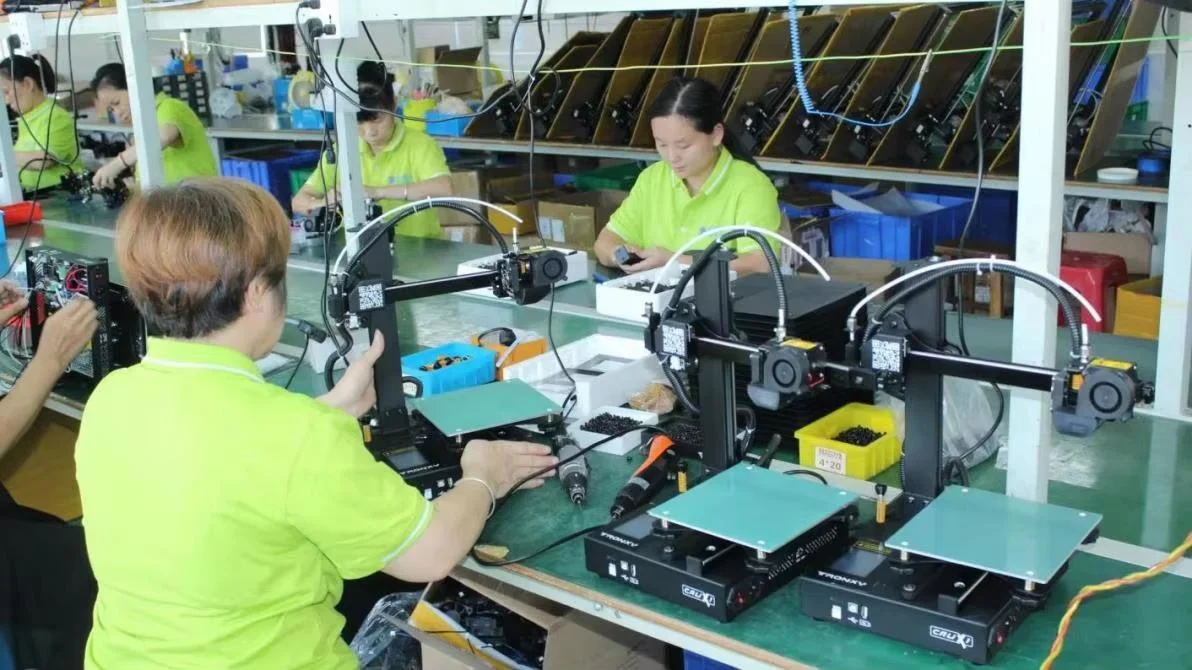
1. Frame Fabrication & Inspection
Frame components are cut, deburred, and checked in the network's machining bays. Mounting points are verified against the revision drawing before the frame moves on — anything out of specification is rejected at source, not reworked downstream.
2. Electronics Sub-Assembly
Controller boards are built at the electronics benches and verified at the PCBA testing station before installation. Wiring harnesses are fabricated to length with labeled connectors and strain relief, and each harness gets a continuity check before it enters the frame.
3. Motion System Assembly
Rails, gantry, and carriages are mounted and checked for smooth, binding-free travel. Belts are routed and tensioned with the acoustic and mechanical fixtures standard on the line, and bearings are lubricated before the motion system is handed to final assembly.
4. Final Assembly & Integration
The electronics bay, heated bed, extruder and hotend are integrated into the frame, enclosure panels fitted, and wiring routed through the cable chains. First power-up is the integration gate: every subsystem must respond before the unit moves to the test bay.
5. Calibration & Test Print
Bed leveling and extruder calibration are verified with the machine's own sensors, and the new unit runs the standardized test print on the burn-in bench. Professional series machines get a longer continuous-print run. Results are logged per unit with the checklist and timestamp — the record travels with the carton.
6. Packaging & Pre-Shipment
Model-specific foam inserts and export-grade cartons, with desiccant packs and humidity indicators inside. The accessory checklist is verified against the packing list — spool holder, toolkit, USB drive with software, user manual, and the test-print sample are all accounted for. Export pallets are edge-protected and stretch-wrapped.
Workforce
Skilled Hands, Experienced Minds
Manufacturing precision 3D printers takes more than equipment — it takes people who understand calibration, torque, and test benches. The network team that runs this floor has built printers for a living, full time, for years.
Assembly Technicians
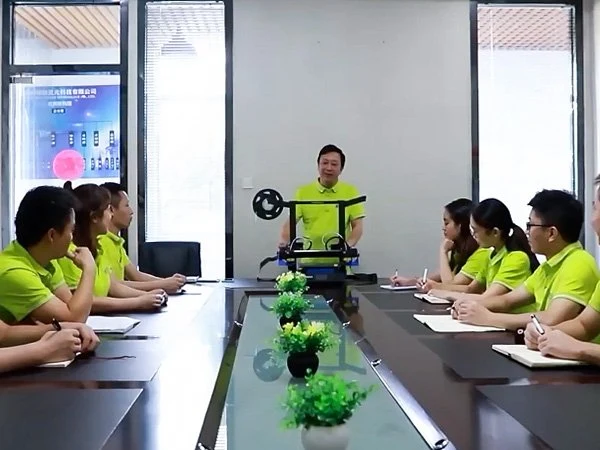
Full-time assembly technicians staff the cell groups, with specialists assigned to frame, electronics, motion, and final integration. Training runs through the floor's internal program, and cross-training keeps each cell group operable when someone is out.
Inspection & Test Staff
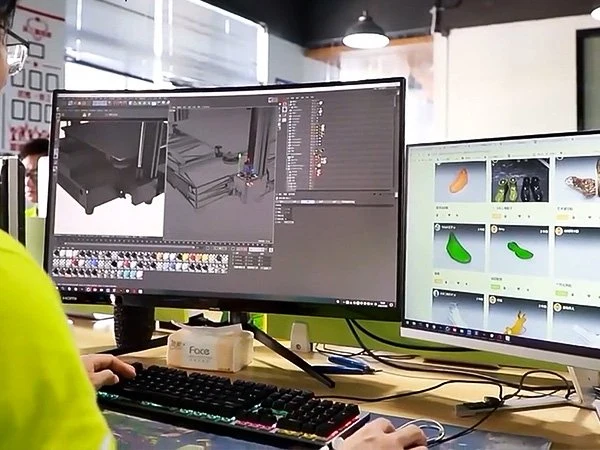
Dedicated inspection staff run incoming-material checks, in-process checkpoints, and the final audit on the burn-in area — and the production network's R&D group, around 15 engineers strong across machines and firmware, is on call when a test result needs engineering input.
Process & R&D Engineers
The network's engineering group works continuously on workflow improvement — fixture redesigns, flashing and test procedures, and packaging for freight — and runs improvement reviews on the production cycle. Iterations get tested on the floor, not in a deck.
Supply Chain Team
Procurement and inventory management run on documented supplier relationships for the component set of each model. Long-term supply agreements and forward stock on critical parts keep production plans from stalling, and supplier performance is reviewed on a rolling basis.
Certifications
Manufacturing Standards & Compliance
Our factory operates under internationally recognized standards. Every process is documented, audited, and continuously improved.
CE (LVD) — Third-Party Verified
The printer series holds CE Low Voltage Directive conformity: LVD 2014/35/EU, EN 62368-1:2014+A11:2017, report on file issued by an independent third-party laboratory. Copy provided with shipments; verifiable online by report number.
RoHS & Production Compliance
RoHS 2.0 compliance (EU 2015/863) is documented by a report on file from the same independent laboratory — and every unit is power-tested and print-tested on the burn-in line before packing. See the certification register with verification steps →
Honest Disclosure — Other Markets
Beyond CE and RoHS, we claim nothing we cannot produce: no US radio authorization, no retail safety listing, and no Korea, India, South Africa, or UK conformity marks. For a destination market that needs one, we scope the test with an accredited lab for your project and run it.
Which Credentials to Expect
The starting point is always: CE (LVD) + RoHS verified reports in the box, plus the test log for your units. If your customs broker asks for something we do not hold, we tell you before the order, not after the shipment.
Quality Integration
QC Embedded in Production
Quality is not a separate department — it is embedded at every stage. In-process inspection stations are positioned directly on the assembly line.
IQC — Incoming Checks
Components are sampled and measured on receipt against published specifications, with critical parts — rails, bearings, belts, boards — checked batch by batch. Non-conforming materials are quarantined and returned to the supplier before they can stall the floor.
IPQC — In-Process Checkpoints
Checkpoints run after each assembly stage on the cell groups: go/no-go fixtures for quick decisions, and a documented inspection of the first article of each new batch before the run continues. Sign-off records travel with the build.
FQC — Final & Pre-Shipment
Final audit before packing: unit records checked, packaging integrity verified, carton contents confirmed against the packing list, and the test-print log included in every box. The unit's record and your copy match — that is the check.