Why a Datasheet Is Not a Spec
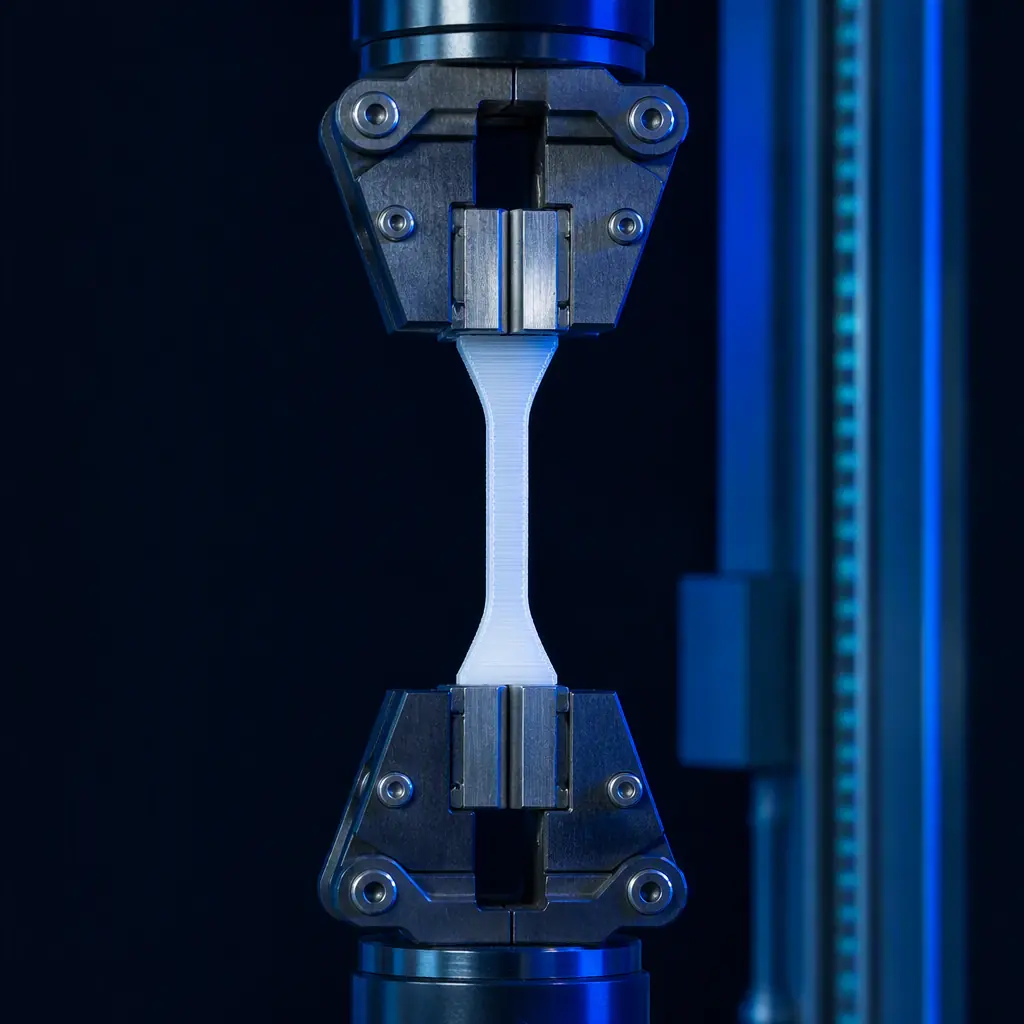
The single most common mistake in the 3D printing parts business is to hand a buyer a material datasheet as if it were a guarantee of part performance. It is not. A datasheet value describes injection-moulded or extruded test specimens of a neat polymer, produced in a controlled lab with no layer interfaces.
Your printed part has layer lines, a first-layer skin, internal voids and an orientation axis. Each of those pulls the measured strength below the datasheet ideal — often by 30-50% for a simple tension in the weakest direction. The authoritative start, when you are matching a material to an application, is the material selection logic in our engineering filament guide.
The Four ASTM Methods That Matter
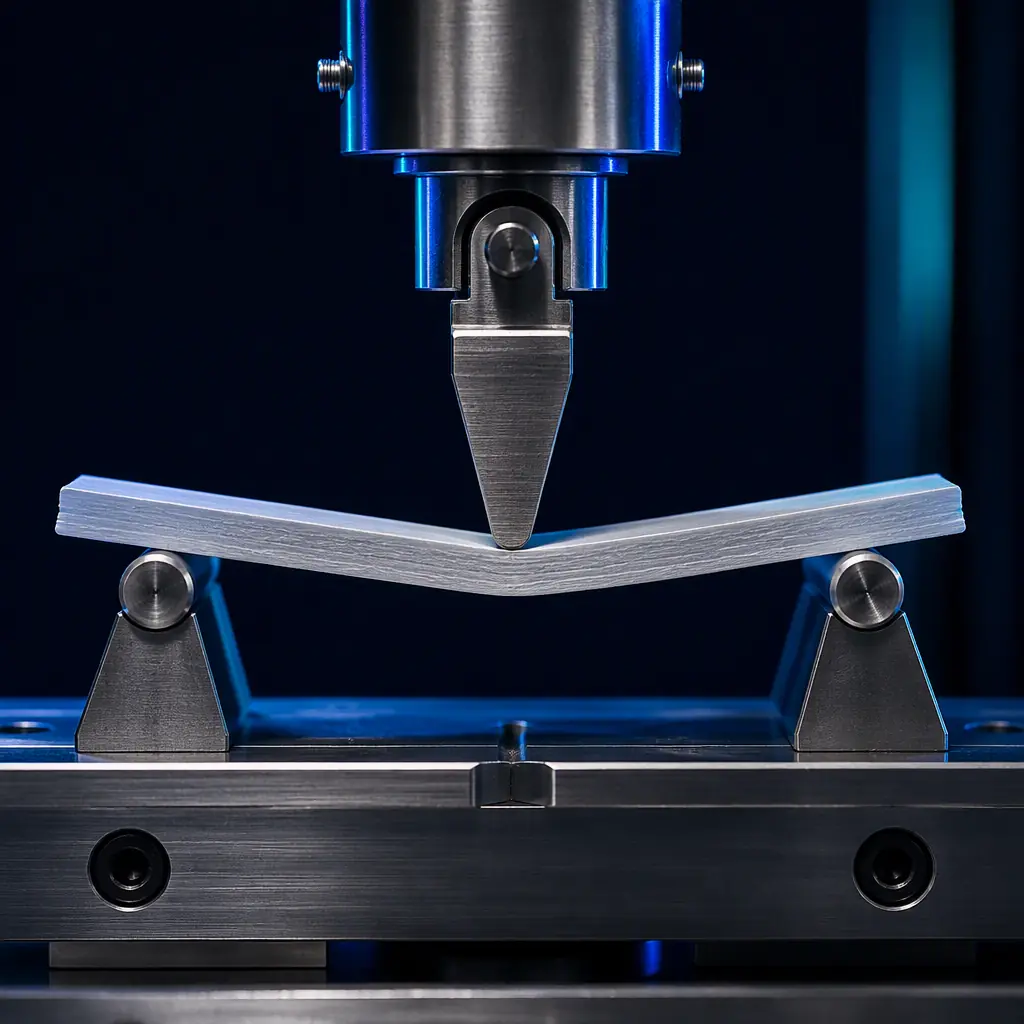
Mechanical testing of plastics is standardised. If you are going to state a strength, rigidity or toughness figure, you cite the method so the buyer can reproduce it. Four methods cover nearly every production part decision.
Tensile is the headline number a buyer quotes first. It is where printed parts are weakest because the force pulls across the layer interfaces if you test in the Z direction. How a printed part is measured against a tolerance is the counterpart discipline, covered in our tolerances and dimensional accuracy guide.
Print Orientation Is the Hidden Variable
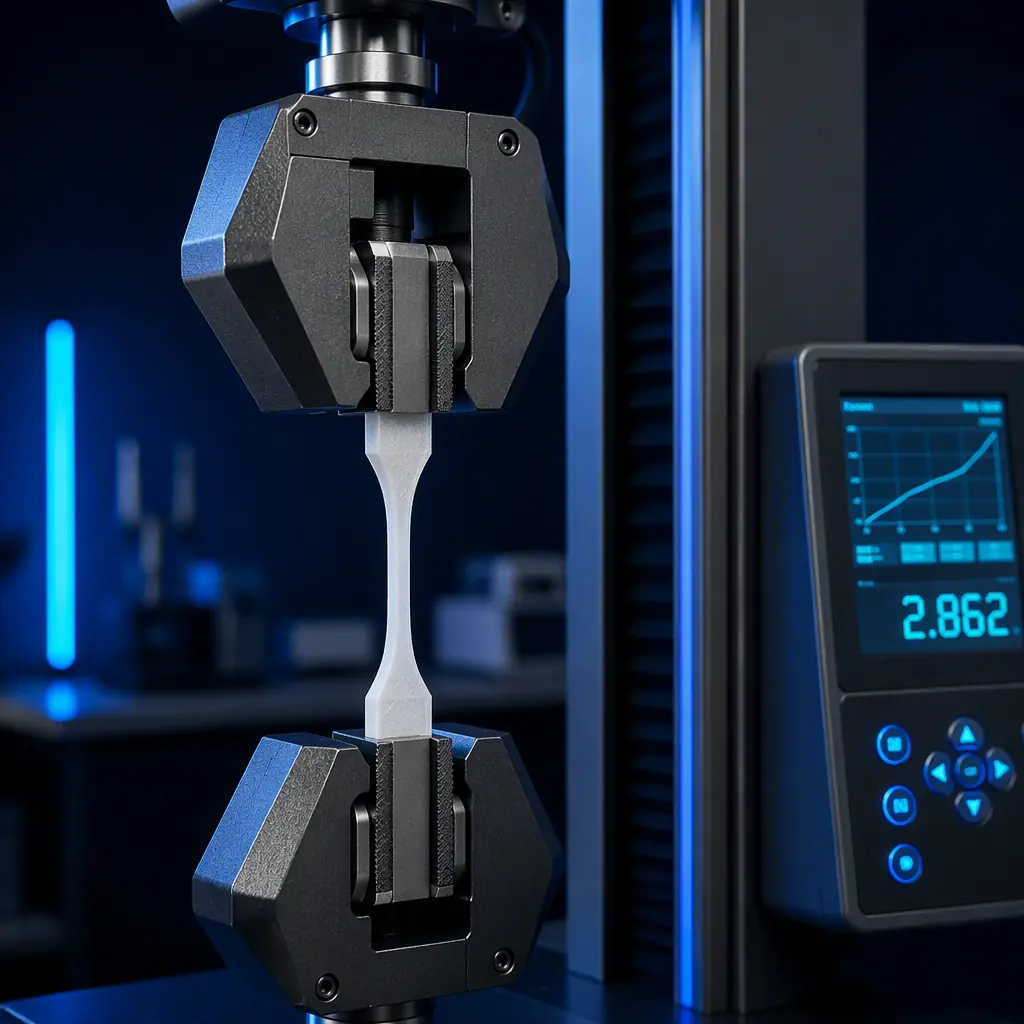
Fused-deposition parts are not isotropic. The deposition path and the layer stacking create a strong axis and a weak axis, and the same part can test 20-40% differently depending on how you orient it on the build plate.
- Flat (XY) orientation. Layers run in the plane of load; tensile strength is highest and closest to the datasheet.
- Vertical (Z) orientation. Load pulls across the layer interfaces; tensile is lowest, often 30-50% down.
- On-edge orientation. A compromise that balances rigidity against the printer’s available build height.
A responsible supplier states the orientation with the property, or the number is meaningless. The design rules that govern printable walls, walls and overhangs are the second half of this conversation, and they are the subject of our DFAM design rules guide.
Layer Adhesion: The Weak Link in Every Printed Part
Even in the flat orientation, a printed part is a stack of bonded straps, not a homogeneous solid. The interlayer bond is formed when fresh molten filament melts into the previous layer, and a cold bed, fast print or too-low nozzle temperature weakens that weld.
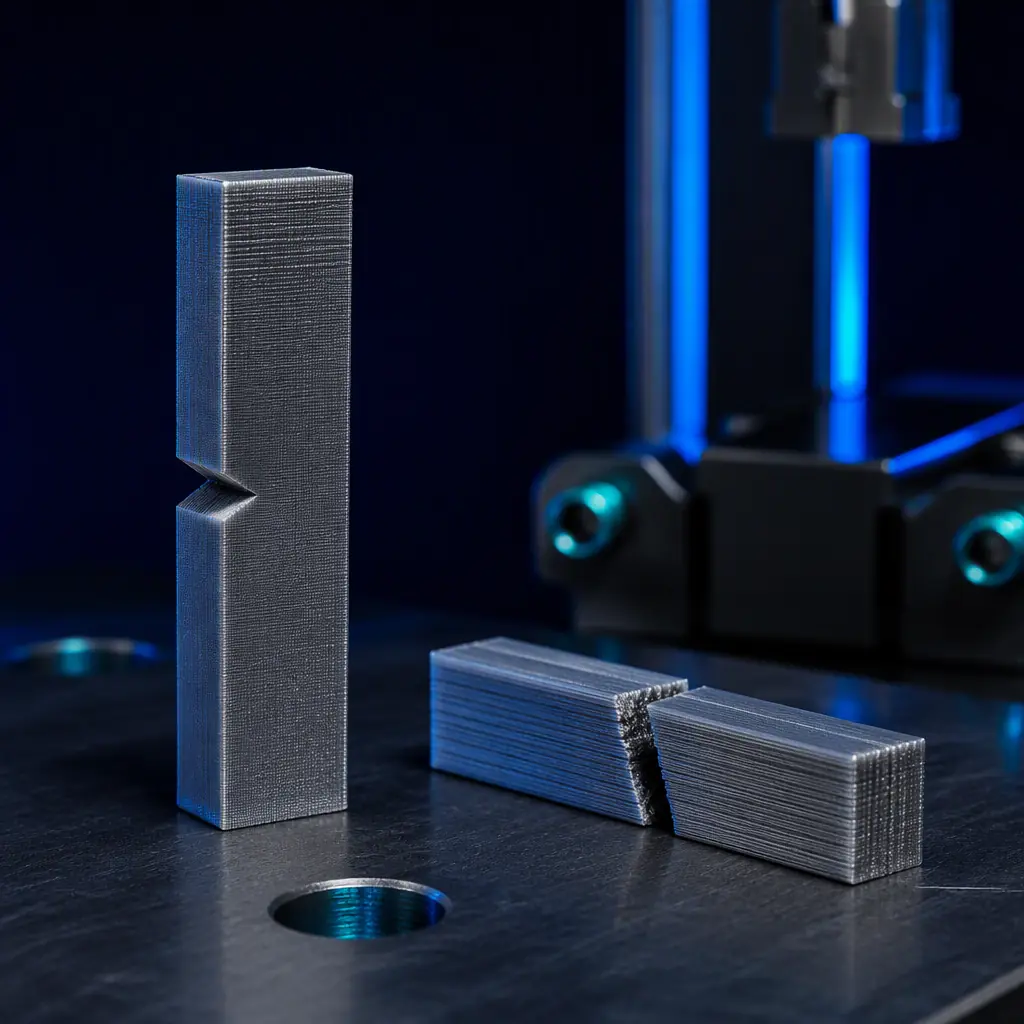
What you're looking for: If the break is clean and flat along a layer line, your interlayer bond — not the polymer — is the limiting factor, and you are likely under-heating the nozzle, over-cooling the chamber or printing too fast for the material to fuse. A part that fails through the wall is working as designed and the material is the bottleneck. Test both and you will know which one you are actually selling.
Tuning nozzle temperature, bed temperature and cooling to maximise bond strength is the territory of the troubleshooting method in our print failure diagnosis guide.
Impact and Toughness: The Number People Skip
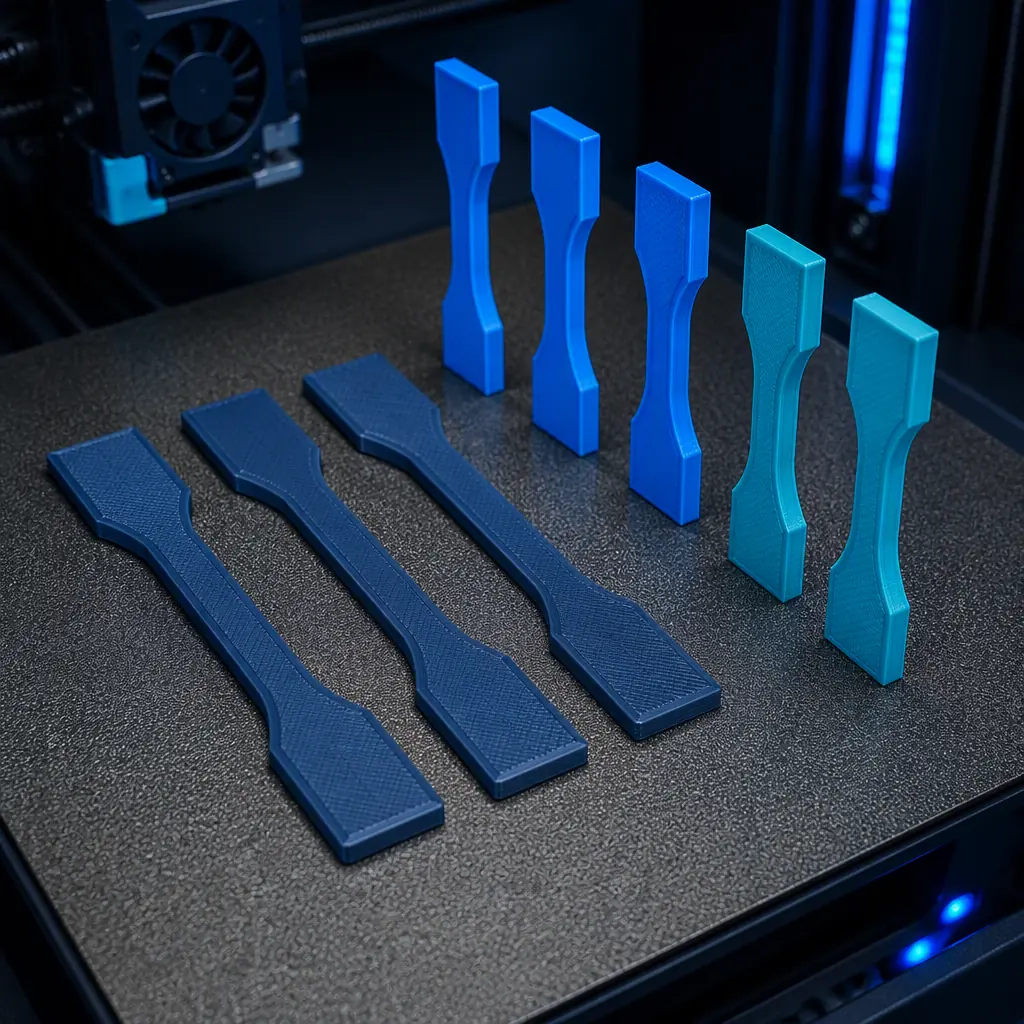
Strength predicts a part under a steady load; it says little about a part that gets dropped, hit or cycled. Toughness is where engineering polymers separate from consumer grades. IZOD (ASTM D256) and Charpy measure the energy a notched bar absorbs before breaking, and the notch sensitivity tells you how a scratch, a corner radius or a layer groove becomes a crack starter.
- PC and PA (nylon) absorb impact well; they yield rather than shatter.
- PLA is strong but brittle; a notched impact value often half of an ABS or PC grade.
- Impact-modified blends trade some rigidity for a big jump in absorbed energy.
The long-term behaviour under load — creep, fatigue and repeated stress — is a different test again and is the focus of our creep and fatigue guide, which is where a part that must last years really starts.
What a Production Buyer Demands
When a customer moves from prototype to production, they stop asking for a brochure and start asking for evidence. A credible mechanical-testing package answers four questions.
Supplying the full production-approval evidence — first article, capability study and tested properties — is exactly the workflow formalised in our PPAP production part approval guide.
Testing for Claims You Can Actually Defend
The value of mechanical testing is not the spreadsheet; it is that you can now stand behind a number. If you advertise “industrial strength” without a tested value, you own the gap. If you publish a tensile value with a method and an orientation, you can defend it, price against it and decline a job that the part cannot hold.
The same discipline applies to the dimensional side — a surface-roughness figure and a measured tolerance belong in the same quote, and the measurement method for those lives in our Ra/Rz surface roughness guide.
How Precise3D Grounds Material Claims in Data
At Precise3D we run a 3,500 sqm Shenzhen production network with incoming QC and a documented control plan, and machines are calibrated against an artifact rather than trusted by eye. That discipline extends to material claims: parts are checked to a measured plan, not a vibes-based check, and where a customer needs a verified number we can supply a dimensional and material report on a production run.
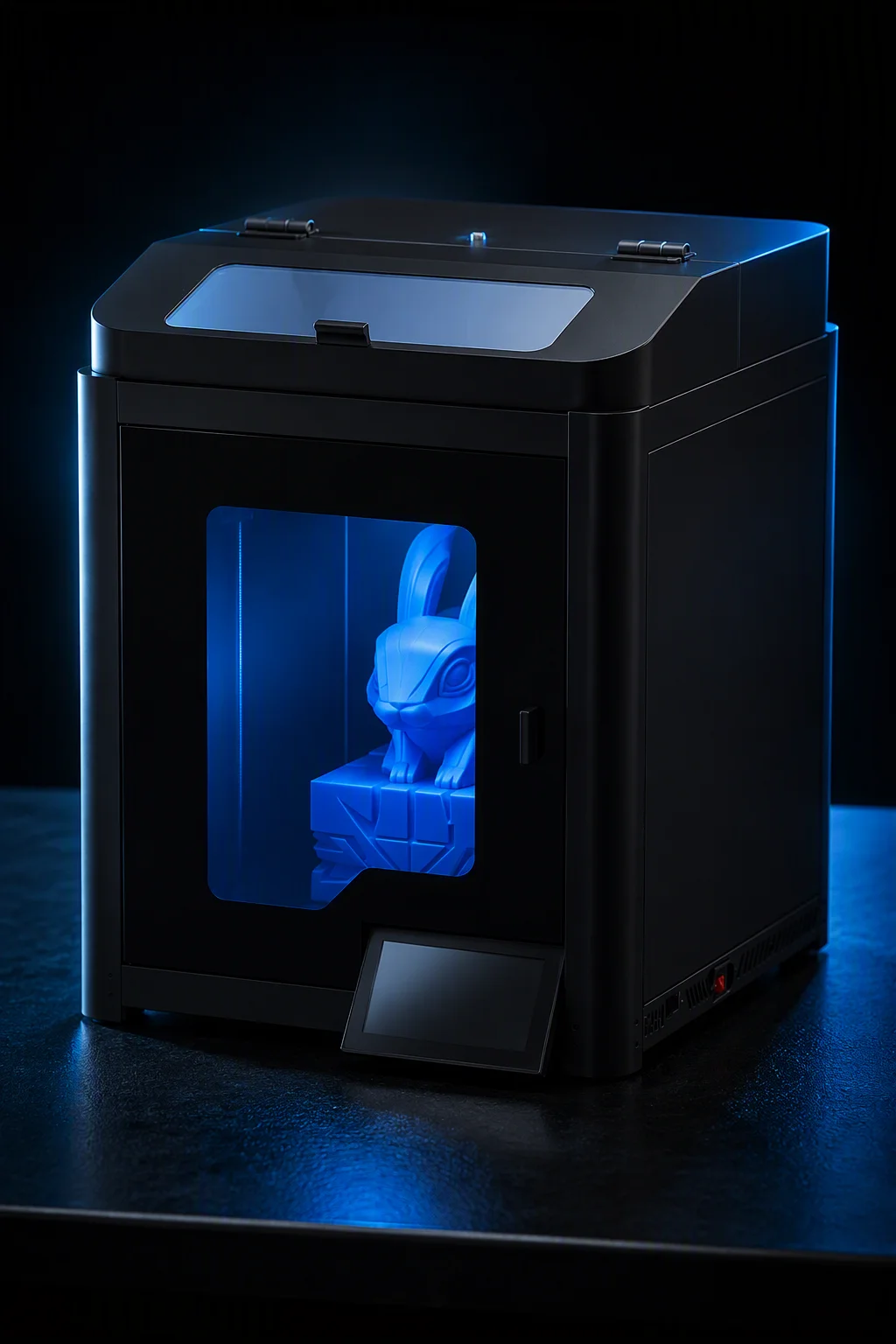
Our OpenSource1 and Pro X1 platforms deliver a 500×500×500 mm build volume at up to 600 mm/s with a 320°C hotend, and the heated chamber and closed-frame design support engineering polymers that hold real published properties. Every unit ships with CE LVD (EN 62368-1:2014+A11:2017) and RoHS (EU 2015/863) documentation. That is what makes a mechanical number a claim you can back with a capability, rather than a brochure line.
Reviewed by the Precise3D quality and engineering team. Mechanical properties of a printed part are a function of material, geometry, orientation, process settings and the test method used; always state the ASTM method and the print orientation with any property you publish, and verify the as-printed value rather than quoting the polymer datasheet.
Measure the Part, Not Just the Claim
Need Printed Parts With Tested, Repeatable Properties?
Calibrated machines, documented process control, and a mechanical or dimensional report on the parts you actually receive. Production on demand for distributors and OEMs worth spec.