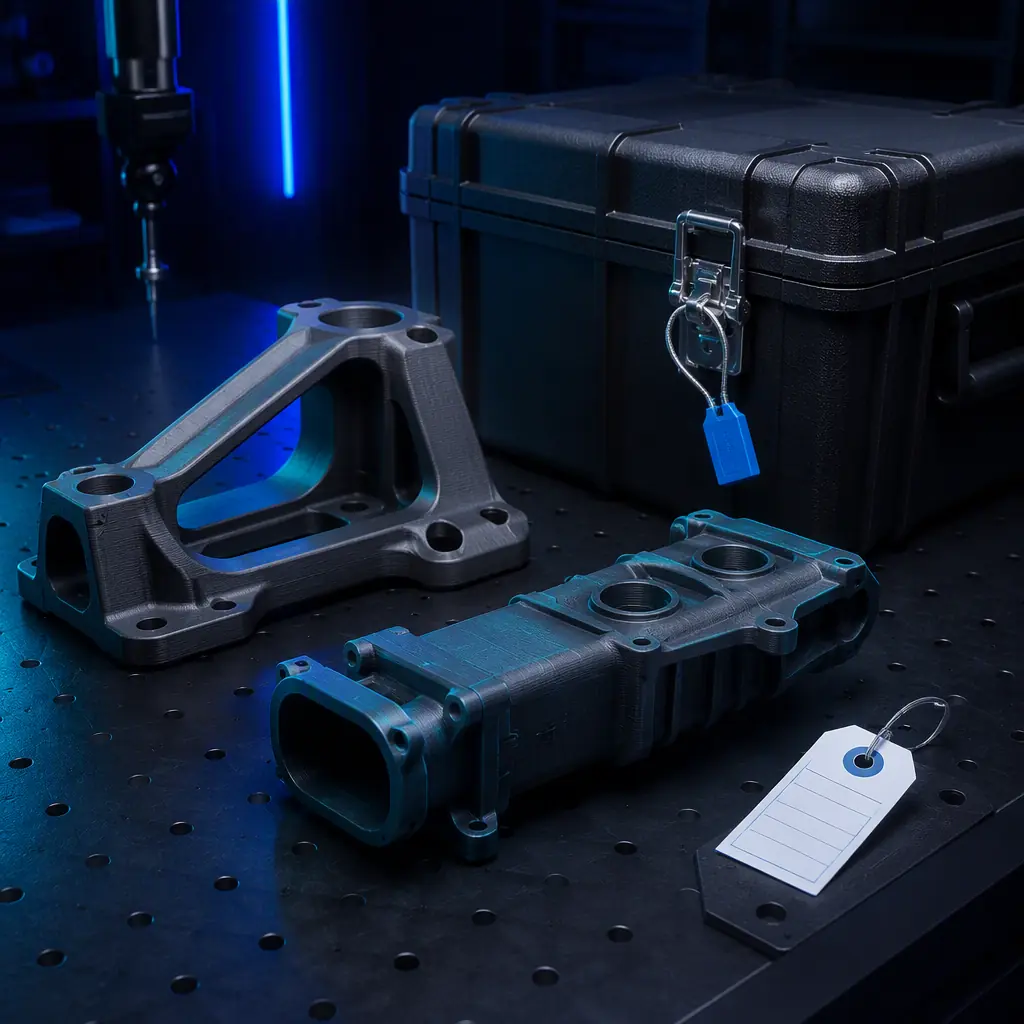
Why Export Control Is a Distributor Problem, Not Just an OEM Problem
A common assumption is that export compliance belongs to the manufacturer. In additive manufacturing distribution the opposite is often true. You are the person placing the item into commerce and naming the end user, so on the Shipper’s Export Declaration and on the invoice you are the party of record. If a 3D printed part is controlled, the liability attaches to whoever exported it — which in a drop-ship or wholesale model is usually you. That is why the distributor-facing compliance question is worth writing about and worth getting right.
The first thing to internalise: a printed part is controlled based on what it is and where it goes, not on how it was made. Additive manufacturing does not add a carve-out. The same geometry CNC-machined from billet and the same geometry printed from a spool are judged against the same list. That is the single fact that turns a “we just print plastic” mental model on its head. For the broader quality and liability picture that frames these decisions, our distributor insurance & liability guide and our certification & compliance guide are the two reads to have open.
ITAR vs EAR: The Two Lists That Decide Your License
The United States runs two primary export control regimes, each with its own regulator, its own controlled list and its own penalty structure. Confusing them is the most common compliance error, because the same part can fall under one, the other or neither depending on its design and destination.
ITAR (International Traffic in Arms Regulations, 22 CFR §§120–130) is administered by the State Department’s Directorate of Defense Trade Controls and covers items and technical data on the U.S. Munitions List. These are defense articles and defense services — weapon systems, certain military equipment, and the technical data that supports them. A printed replacement part for a military vehicle or an aircraft in military service can sit squarely on this list. Our military & defense land-vehicles guide explains the part categories where this first shows up.
EAR (Export Administration Regulations, 15 CFR §§730–774) is administered by the Commerce Department’s Bureau of Industry and Security and covers dual-use items on the Commerce Control List — goods and technologies that have both commercial and military application. Most consumer 3D printers and their ordinary printed parts fall at or below the CCL threshold and are classified EAR99, which needs no license for most destinations. But a printer capable of certain engineering materials, or a printed component with a controlled capability, can move up the list. Our drone & UAV manufacturing guide and our satellite & new-space guide touch the end-uses where this nuance matters.
The Practical Test: Classify the Part, Then Screen the Buyer
You do not need to be a customs broker to make the two determinations that matter on 90% of orders. The first is the item’s classification — is this a defense article, a controlled dual-use item, or an uncontrolled consumer part? The second is the end user and end use — who is buying it and what will it be part of? Both must be answered before you quote, because the answer changes whether a license is required, whether you can ship at all, and whether you risk losing export privileges.
For the first determination, the fastest reductive question is whether the part is for a listed defense system or has a controlled capability. For the second, screen against the Consolidated Screening List, which merges the U.S. government’s restricted-party and denied-party lists into one searchable dataset. If a company or a country on that list is involved, do not ship without a license from the correct regulator. The screening habit is the cheapest insurance in export control — a five-minute check that sits between you and a five-figure fine.
What you're looking for: A part for a military vehicle, an aircraft in military service, a defense prime or a sanctioned country/entity → stop and classify before quoting; a part for an ordinary consumer or industrial product with no controlled capability → EAR99, ship normally.
The De Minimis Rule and Re-Export: Why Geography Alone Is Not Enough
Export control is not only about direct shipments from the United States. The EAR has a “de minimis” rule that can reach into a product made anywhere in the world if it contains more than a defined percentage of U.S.-origin controlled content. For most destinations the threshold is 25%; for a handful of embargoed countries it drops to 10%. The practical consequence for a distributor is that an item assembled in China, Vietnam or Taiwan is not automatically outside the EAR — if it incorporates U.S.-origin controlled technology above the de minimis line, certain exports of it are still controlled and still need a license.
Linked to this is re-export: shipping a controlled item from one foreign country to another is itself controlled and can require a license even though no U.S. border was crossed. A single long-term contract with a defense aftermarket buyer can create dozens of such re-export events, each one a separate compliance obligation. The record-keeping story below exists precisely because the volume of these small events is what an audit looks at. For the framework of running a compliant channel and keeping files straight, our government & public-sector procurement guide and our B2B RFQ playbook are strong companions.
Record-Keeping and the Five-Year File
Both ITAR and EAR impose record-keeping duties on exporters, broadly requiring that documents that support an export be retained. The exact period varies by regime, but a working practice for a distributor is to keep relevant export records for roughly five years. This means preserving the commercial invoice, the packing list, the buyer’s end-use or end-user statement, the classification basis and any license or license-exception citation. When a customer calls a year later asking for proof of what they shipped, that file is the difference between a quick answer and a scramble.
The efficient way to make this sustainable is to build it into the order flow rather than treat it as a post-hoc task. A saved template that captures category, country, customer name and a classification note on every export order means the compliance trail is a by-product of normal selling, not an extra job. Our import from China: HS codes & customs guide and our crating & international shipping guide round out the paperwork mechanics that sit around export control.
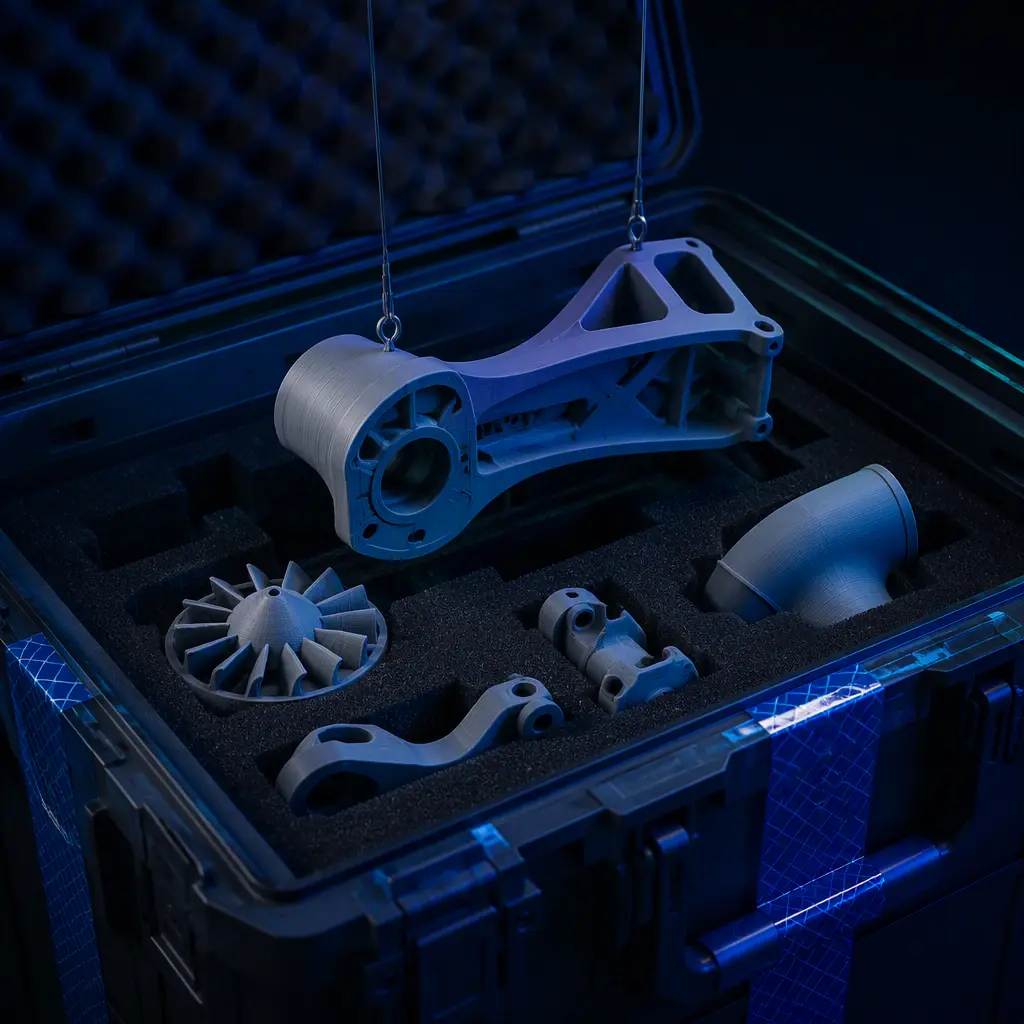
Building a Repeatable Compliance Checklist
The compliance posture that wins accounts rather than loses them is one that is fast and consistent. Defense and aerospace buyers will not touch a supplier who cannot show that export control is handled; but they also will not wait a month for a cautious quote. The answer is a standardised checklist that a sales rep can run in minutes per order, so that compliant sellers clear the gate quickly and uncompliant ones are caught before they ship.
The five-step screen to run on every export order:
- Determine classification. Is the item on the USML, on the CCL, or EAR99? If unsure, get a written basis for the classification before quoting.
- Screen the buyer. Run the customer and any consignee against the Consolidated Screening List; flag any hit.
- Check the end use. Is it for a defense system, a missile, a controlled aerospace platform, or a sanctioned program?
- Confirm the destination. Check the country against embargo, sanctions and country-specific controls, and be alert to re-export routes.
- Embody and retain the decision. Note the classification basis, the license or exception relied on, and file the record for the required period.
For the adjacent sales and channel decisions that a distributor runs alongside compliance, our territory & sales compensation guide and our portfolio & market-segment strategy cover how to size and segment the defense-adjacent pipeline productively.
Over-Compliance Is a Competitor Edge, Not a Cost
Finally, it is worth reframing the risk. Distributors often treat export control purely as an overhead to minimise. The better view is that a clean, documented process is a sales asset in defense and aerospace, where buyers are legally required to work only with compliant partners. Being the supplier who can show a classification file and a screened buyer list is a differentiator that a price-cut can never match. The businesses that treat compliance as a moat, rather than a tax, are the ones who win the defence and aerospace accounts that have the longest lifetimes and the highest margins.
At Precise3D, our high-accuracy printer platform and documented, auditable engineering workcell are built to serve distributors into the tough-account verticals: military and defense land vehicles, aerospace and aviation MRO, drones, satellites and new space. We keep the certification and quality register auditable so that a distributor who needs to stand behind an export-controlled sale has the documentation to do so — reviewed by our engineering & OEM team, with the certification register available for audit.
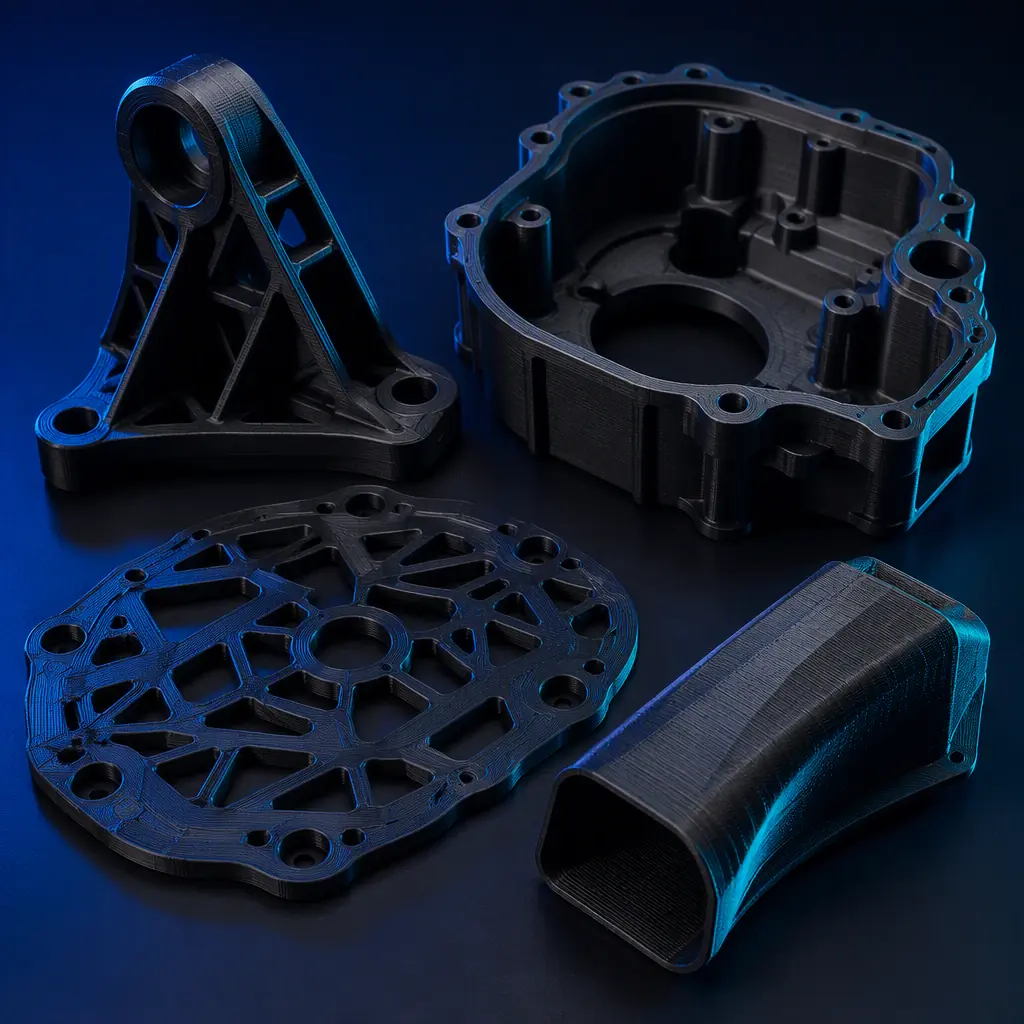
Reviewed by the Precise3D engineering & OEM team. Compliance files that accompany the catalog are auditable at the certification register.
Enter This Vertical
Ready to Supply Defense & Aerospace Accounts Compliantly?
Join our network of global distributors. High-accuracy, documented printers with an auditable engineering workcell and the hardware pedigree for military, aerospace, drone and satellite work — everything you need to quote tough-account parts with confidence.