The Re-Export Nobody Claimed
A European distributor imports 60 machines, pays duty and import VAT at the border, and eleven months later ships 14 of those machines onward to a customer in Turkey. The distributor has just exported goods it previously imported into the EU, and under the drawback procedure a large part of the duty paid on those 14 machines is recoverable. Almost nobody claims it. The paperwork is not the obstacle; the obstacle is that the broker who cleared the original entry has no incentive to tell anyone that a refund exists, and the window is limited.
Additive hardware is an unusually good fit for drawback for a structural reason. Machines are high-value, physically durable, individually traceable by serial number, and frequently re-exported: demo units move between territories, evaluation printers return to the factory and come back out, and distributor stock is redirected when a territory changes hands. Each of those movements is a potential claim.
This guide covers what drawback actually is, the arithmetic on a real shipment, the three claim routes and which fits a printer distributor, the record requirements that decide whether a claim survives, and the cases where pursuing it costs more than it returns.

What Is Duty Drawback on Imported 3D Printers?
Duty drawback is a refund of import duties and certain taxes paid on goods that are later exported from the same customs territory. It is not a subsidy and not a discretionary relief: it is a statutory refund of a tax that was correctly paid at import and effectively un-consumed because the goods left. The most common form refunds up to 99% of the duty on imported merchandise that is exported in the same condition as imported.
The phrase "same condition" is doing the heavy lifting. A 3D printer that is imported, warehoused, then re-exported without modification is a clean same-condition case. A printer that is imported, fitted with a different extruder and a laser module, then re-exported has been subjected to a process, and the analysis moves to a different claim category with tighter rules. A spare part that is imported, assembled into a machine, and shipped inside that machine is a third case again, and the most complicated of the three.
Jurisdiction matters enormously here, because the mechanics differ between the United States, the European Union and the United Kingdom even though the principle is shared. This guide uses the EU inward processing and repayment framework and US drawback as the two reference points, and flags where a distributor elsewhere must check the local rule rather than assume either.
How Much Is Actually Recoverable?
The refund is calculated on duty, not on the goods value, and for 3D printers the ratio between the two depends on the HS classification that was applied at import. Printers commonly classify in the 8443 series, where EU duty rates are commonly zero to low single digits, while spare parts and accessories frequently attract higher rates than the machine itself.
That inversion is the commercial insight. A distributor who imports printers at nil or low duty and parts at a higher rate, then ships failed parts back to the factory for credit, is exporting goods that carried real duty. The claim is small per part but the volume is continuous.
| Item | Typical import duty rate | Value per shipment | Duty at stake |
|---|---|---|---|
| FDM printer, machine classification | 0-2.7% | EUR 420,000 (60 units) | EUR 0-11,340 |
| Resin printer, machine classification | 0-2.7% | EUR 96,000 (24 units) | EUR 0-2,592 |
| Spare parts and accessories | 1.7-4.7% | EUR 38,000 | EUR 646-1,786 |
| Filament, non-preferential origin | 6.5% | EUR 74,000 | EUR 4,810 |
| Import VAT | Not drawable in EU | - | Recovered via VAT return instead |
Two numbers in that table need emphasis. First, import VAT is not part of a drawback claim in the EU, because it was already recoverable through the normal VAT return as input tax for a VAT-registered trader; claiming it again is a common and expensive mistake. In the US, the corresponding merchandise processing fee and certain internal taxes are treated differently and must be checked separately. Second, the filament line is usually the largest single duty exposure in a distributor's book and the least likely to be re-exported in a claimable state, because it gets consumed.
Which Claim Route Fits a Printer Distributor?
There are three routes, and choosing the wrong one is the most common reason a claim is rejected rather than reduced. The distinction turns on what happened to the goods between import and export.
Repayment of duty is the retrospective route. Goods are imported under normal procedures, duty is paid, and the refund is claimed after export with evidence that the goods left in the same condition. This suits the demo-unit and territory-redirection cases, and it is the route most distributors should use because it requires no pre-authorisation and no change to how the goods were imported.
Inward processing is the prospective route. Goods are imported under an authorisation that suspends duty at entry, on the undertaking that they will be re-exported within a defined period. It suits a distributor who knows at import that a defined share will move onward, because it removes the cash flow entirely rather than refunding it later. The cost is an authorisation, an economic test in some jurisdictions, and a bill of discharge that must reconcile every unit.
Duty suspension or a customs warehouse is the deferral route rather than a refund route, and it is the one covered by our bonded warehouse and FTZ guide. It removes the duty from the cash flow while goods sit in stock, but it does not refund anything and it does not by itself resolve the position of goods that leave the territory. Distributors routinely conflate deferral with drawback and conclude that a warehouse programme has already captured the benefit. It has not: deferral avoids paying, drawback recovers what was paid, and a distributor using only a warehouse still leaves paid duty on any unit that was cleared before the programme started.
What you're looking for: A three-way link between entry, duty payment and exit. A distributor who can produce all three for a sample of ten units has a claimable book. One who can produce the exit but not the matched entry has a stock system that tracks quantity but not customs identity, and that is the single defect that sinks most first-time claims.
The Record That Decides the Claim
Drawback is an evidence procedure. The refund is available in law and denied in practice whenever the paper chain has a gap, and the gaps are predictable in exactly four places.
- Entry-to-serial linkage. A claim needs to identify specific imported goods. Import entries record quantities and values, not serial numbers. The distributor must maintain its own serial-to-entry mapping at goods-in, because reconstructing it a year later from warehouse movements is unreliable.
- Duty actually paid, per entry. The claim is limited to duty paid and is calculated per entry. Aggregate duty from an annual summary is not a substitute, and brokers' summary invoices frequently do not carry the per-entry breakdown that customs will ask for.
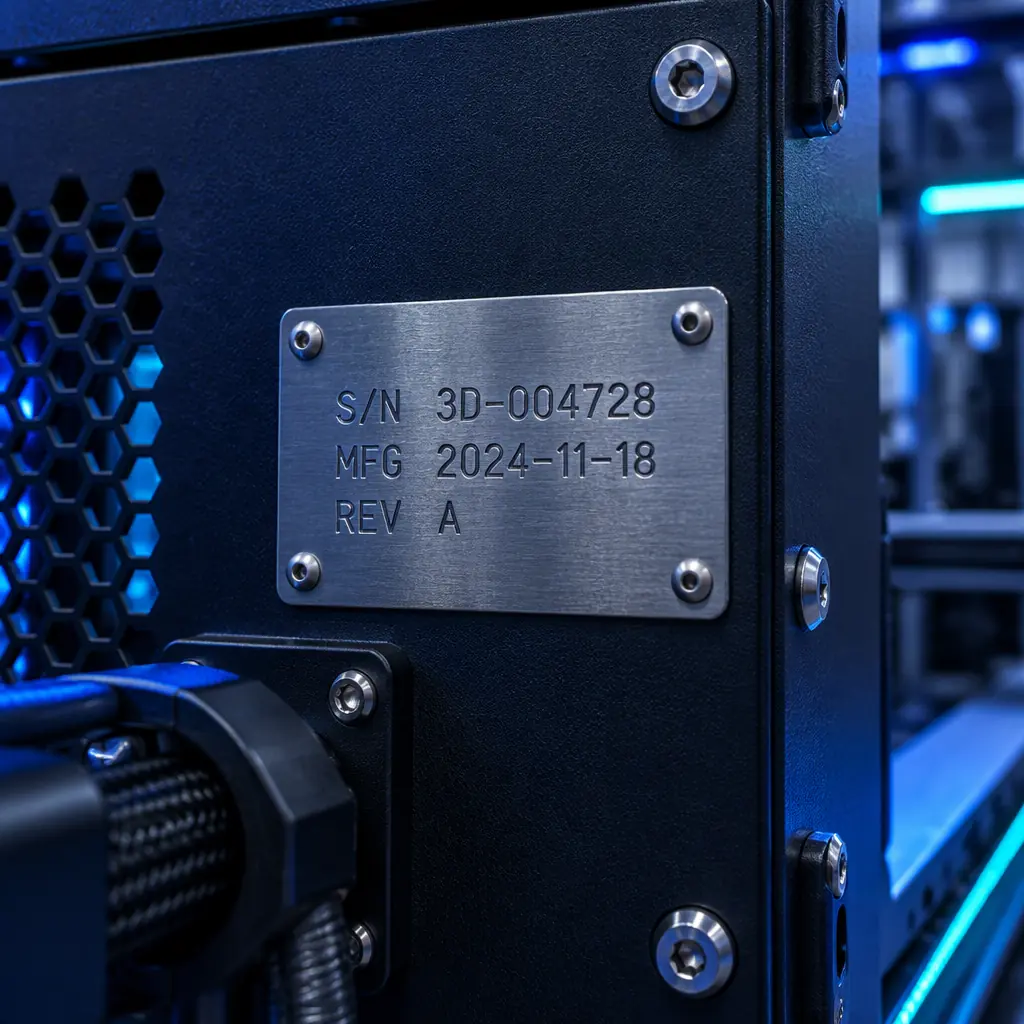
- Export evidence. The export declaration must identify the goods and the exporter, and the claim must show that the exported goods are the imported goods. Photographs, serial plate close-ups and a packing list that carries serials are accepted evidence of identity; a generic commercial invoice is not.
- Same-condition attestation. A statement of what was and was not done to the goods, with maintenance and repair declared. A printer that had a hotend replaced under warranty is still in the same condition for this purpose; one that was upgraded to a different specification is a different question and must not be presented as unchanged.
The serial-level discipline has a second payoff. Distributors who maintain serial-to-entry mapping discover, as a by-product, which units are still in stock beyond their expected turnover, which is the input to the fleet refresh arithmetic in our fleet refresh and rebuild threshold guide. The same book serves the duty claim and the inventory decision.
When Chasing Drawback Is a Waste of Time
Drawback has a fixed cost per claim that does not scale down. A broker will charge for the reconciliation and the filing, customs will audit the evidence, and the internal effort of building the serial book is real. Four situations fail the cost-benefit test.
Low-duty machines with clean exits. If the printer was imported at nil duty, there is nothing to recover, and the effort of building the claim book produces a claim of zero. Check the actual entry before assuming the rate.
Goods that were materially transformed. A printer upgraded to a different model specification, or a part consumed into a finished machine, does not fit the same-condition route. The manufactured-product route exists but requires a substitution and component accounting that is rarely economic at distributor scale.
Claims below the administrative floor. Below roughly EUR 3,000 of duty, the professional fees consume the recovery. Accumulating several low-value exports into one claim is possible in some jurisdictions and not in others, and the rule must be checked rather than assumed.
Where a bonded programme already covers the flow. If goods are moving through a bonded warehouse or inward processing authorisation, the duty was never paid and there is no drawback to claim. Running both on the same goods is how distributors file claims that customs reduces to nil, and the reduction is legitimate rather than adversarial.
A Worked Example
Take the case from the opening. Sixty FDM printers imported at EUR 7,000 each, duty rate 2.7%, duty paid EUR 11,340 across the entry. Eleven months later, fourteen units are exported to Turkey at EUR 7,400 each. The units were warehouse-stored, powered up for demo use, and otherwise unmodified; one had a hotend replaced under warranty.
The claimable base is the duty attributable to fourteen units: 14 divided by 60, multiplied by EUR 11,340, which is EUR 2,646. That is below the administrative floor on its own. The distributor waits and adds the next re-export batch, which brings the combined claim to EUR 5,800 of duty across two entries and three export declarations, and files once. The hotend replacement is declared in the same-condition attestation with the warranty record attached, because the alternative, presenting the printer as untouched, would be a misstatement over a EUR 60 part.
The claim succeeds on three artefacts: the serial-to-entry mapping built at goods-in, the per-entry duty figures from the broker's entry confirmations, and the export declarations naming the serials. Nothing in the file required new systems. All of it required that someone decided at goods-in to record serials against entry numbers.
Sequencing Drawback Against the Rest of the Customs Programme
Drawback is one instrument among four, and the sequencing between them determines whether a distributor gets the benefit or fights customs about double-counting.
| Instrument | When duty is handled | Best fit | Conflict risk |
|---|---|---|---|
| Ordinary clearance plus drawback repayment | Paid at import, refunded after export | Uncertain re-export, demo fleets | Low, but needs serial book |
| Inward processing | Suspended at import | Known onward share | High if combined with drawback on same goods |
| Customs or bonded warehouse | Deferred until release | Stock held for resale in territory | Deferral is not refund, no overlap |
| Preferential origin claim | Reduced or nil at import | Qualifying origin | Nil duty leaves nothing to draw back |
The sequencing principle is simple and worth stating plainly: you cannot recover duty you never paid, and you cannot recover duty twice. A distributor who first establishes preferential origin treatment reduces the duty at import, which is better than recovering it later because the cash never leaves. Drawback then applies only to the flows that fell outside preferential treatment or were cleared before the programme started. Getting that order right is the difference between a programme that compounds and one that generates correspondence.
Where Drawback Sits Against Margin and Cash Flow
Recovered duty is not a rebate on the purchase price; it is cash returned on a cost already booked, and it lands months after the margin on that shipment was reported. That timing matters in a distribution business where working capital is the binding constraint. A distributor who plans on EUR 40,000 of annual duty recovery to fund inventory will be short, because the money arrives in quarterly or half-yearly fragments rather than when the stock is bought.
The cash-side discipline that actually moves the number is upstream: the payment terms agreed with the factory decide how much capital is tied up before the container even clears. Our MOQ and payment terms negotiation guide covers that negotiation, and the international B2B payment methods guide covers the instruments that sit between them. Duty recovery is the small, reliable tail of that equation rather than its head.
Two adjacent exposures are worth pricing at the same time, because they share the same shipment records. Marine cargo cover and the liability position on a consignment held at a border are treated in the insurance and liability guide. And when the goods are moving under a distribution agreement rather than a one-off sale, the exit and territory clauses determine who carries the duty on stock left in a territory at the end of the arrangement: those clauses are set out in the distribution agreement contract terms guide.
What to Ask Your Customs Broker
Most distributors learn that drawback exists from an accountant, a year after the first eligible export. Four questions to a broker turn that into a programme rather than an anecdote.
- Which of my entries in the last three years carried duty, at what rate, and how much? This establishes whether there is anything to claim before any process work begins.
- Can you produce per-entry duty confirmations rather than an annual summary? Without these, a claim cannot be quantified.
- Do you handle repayment claims, or only clearance? Many clearance brokers do not, and the answer changes who does the work.
- What serial-level evidence will the local customs office accept for identity? This varies by member state and determines what the warehouse must capture at goods-in.
The fourth question is the one that changes operational behaviour, because it must be answered before the next container is unpacked. Asking it after the goods are on the shelf means the evidence for this year's imports is already lost, and the claim runs from next year's entries onwards. That is a year of duty foregone for the sake of one question asked too late.
Reviewed by the Precise3D OEM & quality team. Customs procedures, duty rates and recovery percentages change by jurisdiction and by tariff line; the framework described here reflects EU repayment and inward processing rules and US drawback provisions as in force at the time of writing. This is not customs or tax advice. Confirm the applicable rate, window and evidence requirements with a licensed customs broker in your own jurisdiction before filing.
Import Documentation
Need Serial-Level Export Records From Your Supplier?
Serial numbers on every packing list, per-unit commercial invoices that match your entry lines, and HS classification sheets per assembly so your broker can build a claimable book from the first container.