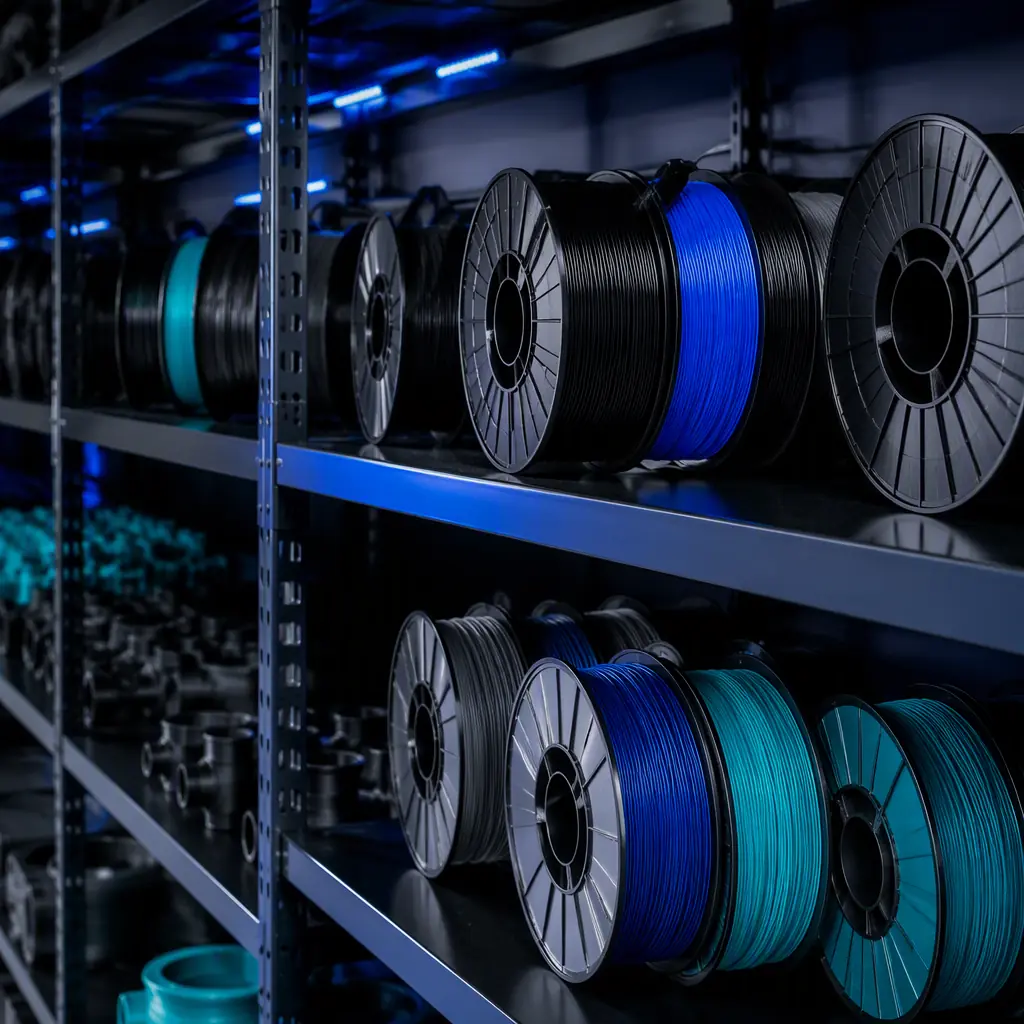
Why the Wrong Polymer Fails Fast
Chemical compatibility is the property a printed part needs before it needs strength. Two mechanisms dominate. The first is dissolution: a solvent absorbs into the polymer, softens it and swells or breaks it down. The second is environmental stress cracking (ESC): a specific chemical attacks a polymer that is simultaneously under tensile stress, and the two together crack it far below its normal load. A part that is fine under load and fine in a liquid on its own can still fail when both are true at once.
That is why the first question a distributor should ask is not “what is the load” but “what is it next to”. For the broader material landscape and the strength picture that sits alongside, our engineering filaments guide and our end-use functional parts guide frame the two sides of the same decision.
The Compatibility Map: Which Polymer Withstands What
No printable polymer resists everything, but the printable range covers a wide spread. The table below is the quick ranking a distributor uses; it reads down the exposure and across the materials, and it is deliberately broad because real service conditions are a combination of concentration, temperature and time.
The pattern to notice is that the species with the best all-round chemical resistance — PTFE, PVDF, PEEK, PP — are also the hardest or most expensive to print. The task is usually not finding the perfect material but ruling out the ones that will dissolve. For the high-temperature engineering members of this group, our PEEK, PEI & PPSU guide and our polypropylene guide go deeper on the two ends of that spectrum.
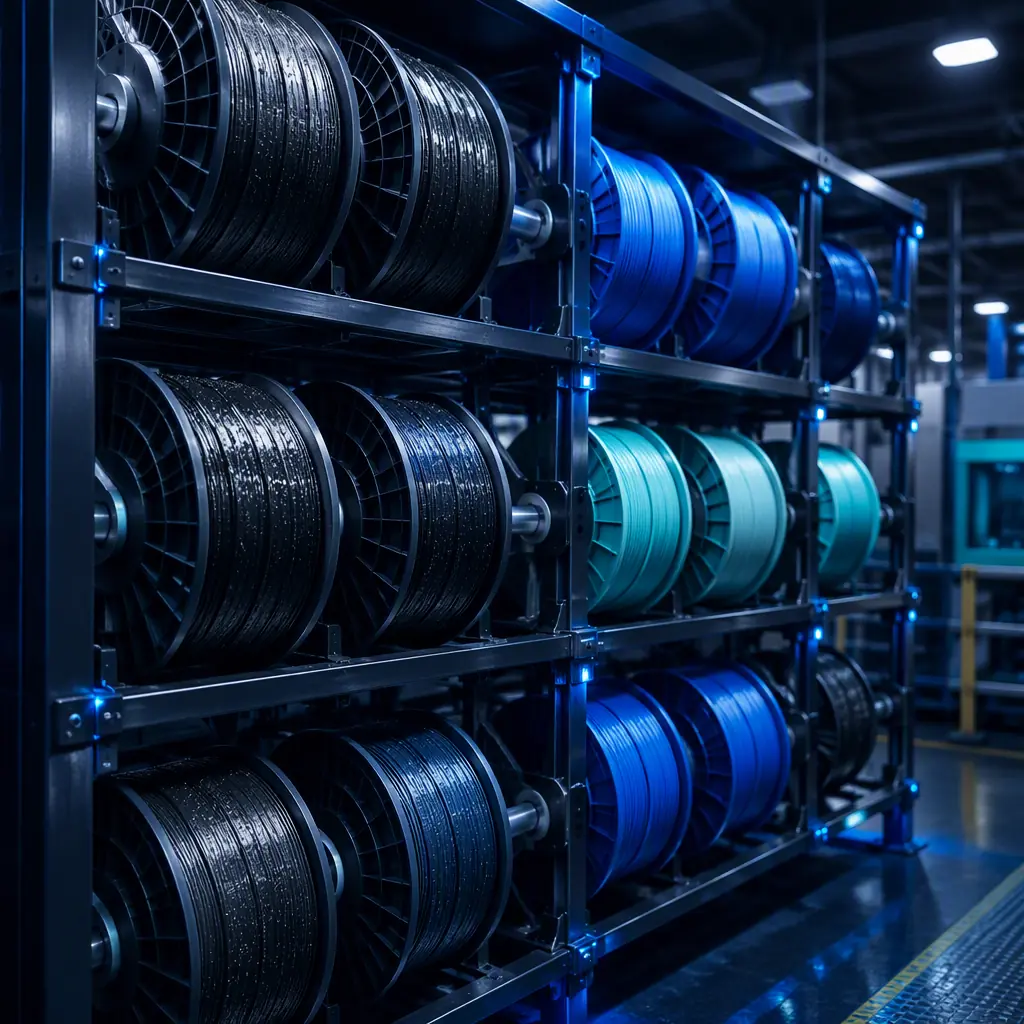
Environmental Stress Cracking: The Silent Failure
ESC is the failure mode that surprises engineers, because the part looks fine right up until it cracks. It happens when a specific chemical — often a non-solvent, sometimes a weak one — attacks a polymer while it is under tensile stress. Polystyrenes and polycarbonates are notoriously susceptible; a lightly loaded polycarbonate part that crackles in a certain household solvent is a textbook example. The crack is sudden, brittle and unrelated to the part’s normal strength.
ESC is also concentration- and strain-dependent, which makes it hard to predict from a datasheet. The practical distributor rule is to ask about the fluid, the concentration and the time of exposure, and to not assume that a material that survives a quick wipe will survive a year of contact. For the flexible and general-purpose members of the printable range, our flexible TPU/TPE guide and our nylon filament guide cover two common choices.
Printing Makes a Part Chemically Weaker
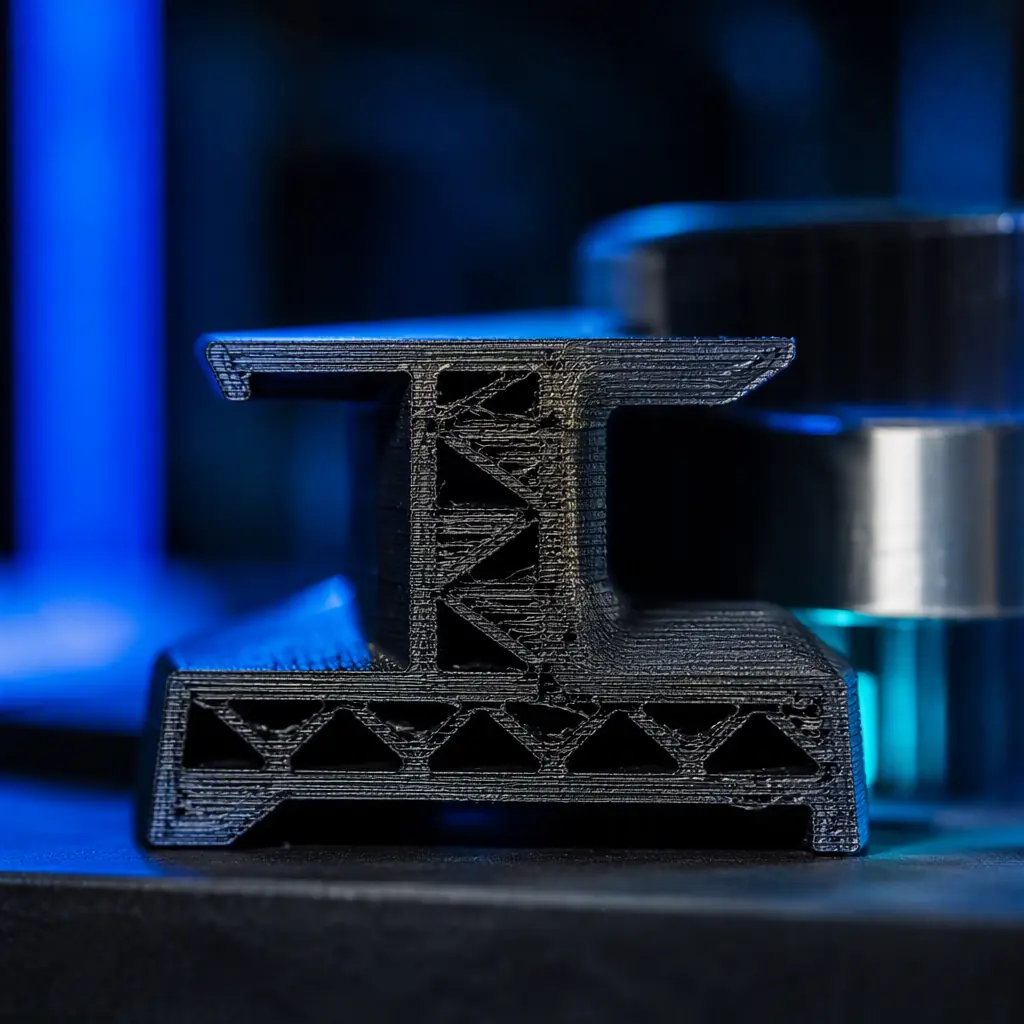
A printed part is not the same object as a moulded one, and the difference matters chemically. A fused deposition part is built from molten strands of polymer laid line over line. Those layers leave a physical seam at every interface, and at each of those seams the polymer has not fully fused. Liquids that would only wet a moulded surface can instead wick along those layer lines into the interior, accelerating attack and swelling.
The consequence is that a printed part has a lower effective chemical resistance than the datasheet for the same polymer suggests. Two mitigations help most: maximise infill and wall thickness to reduce the void the liquid can reach, and, where the surface matters, apply a coating so the chemical never reaches the polymer. For the surface side of that, our post-processing guide is the reference.
Temperature Accelerates Everything
Chemical attack is thermally activated, so a part that would last years at 20°C can fail in months at 60°C. Above a polymer’s glass-transition temperature the structure softens enough that a liquid penetrates far faster. That is why the same material behaves differently in a heated enclosure, a boiler room or a summer warehouse.
So the useful selection question is not just “which material resists this fluid” but “which material resists this fluid at this temperature for this long”. Two variables, not one. For the weather and temperature side of material behaviour, our outdoor & weather-resistant guide and our polycarbonate guide are useful companions.
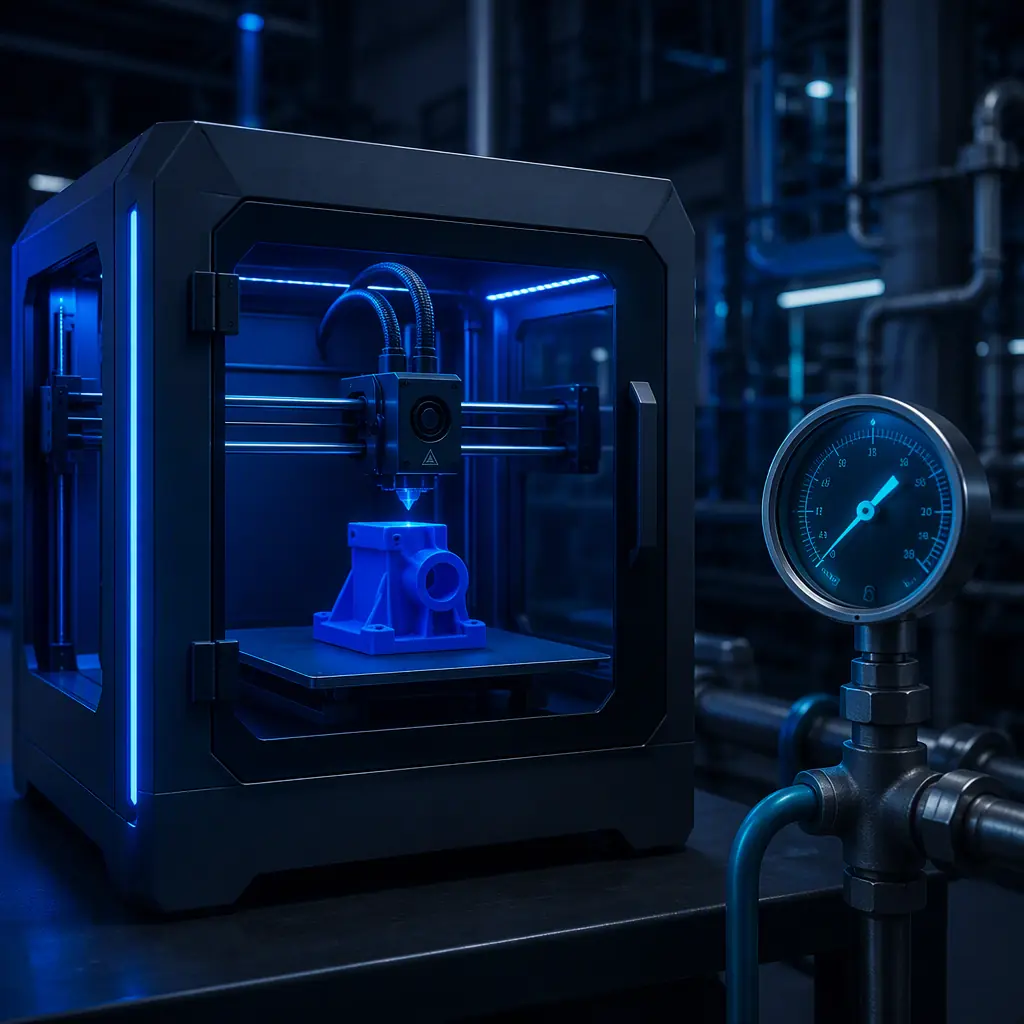
A Selection Framework for the Distributor
When a customer asks which material to use for a chemical exposure, walk the decision in a fixed order rather than guessing. Establish the exact fluid and its concentration and temperature. Identify which polymers the application rules out outright. Then weigh the survivors against the mechanical load, the cost and the printable difficulty. Lastly, check whether a coating or a post-process can extend the resistance cheaply.
- Name the exposure — fluid, concentration, temperature, contact time.
- Eliminate first — strike the polymers the fluid will dissolve or stress-crack.
- Weigh the survivors — load, creep, cost, printability.
- Consider a coating — a barrier can outlast a base-material change.
- Test in service — a small sample in the real condition beats a datasheet.
What you're looking for: If the answer starts with the load instead of the chemistry, the recommendation is set to fail — the base will attack most common polymers at that temperature. Lead with the chemistry, single out a PP, PEEK or PVDF family member, and only then weigh the mechanical and cost trade-offs.
For the chemical-process and general industrial customers who hit this problem daily, our chemical processing industry guide and our pumps & valves guide show the applications the selection rule actually gets used on.
How Precise3D Builds Chemical-Duty Parts
At Precise3D we run a 3,500 sqm Shenzhen production network with four assembly cell groups and a dedicated burn-in and aging line, and we engineer machines that hold temperature for long unattended runs — the repeatability a chemically demanding print needs. We help a distributor narrow the material choice against a real exposure rather than a spec sheet, and we stock the engineering filaments that actually meet those conditions.
Custom branding and OEM white-label starts at 100 units, with the fastest honest path a one-to-five-unit sample order at wholesale pricing, tested in your own environment before you commit. For the material and strength balance that a chemical-duty part also needs, our carbon-fibre filament guide and our infill & strength guide are the companions to this one.
Reviewed by the Precise3D OEM & distribution team. Chemical-resistance ratings are indicative and depend on the specific grade, fillers, concentration, temperature and service time; always qualify with the material supplier and a test coupon in the real environment before committing to a production part.
Engineer the Right Part
Need a Part That Survives the Plant Floor?
Join our network of global distributors. Engineering materials, reliable machines and the selection guidance that puts the right polymer in front of the wrong chemical.