
Distribution vs Manufacturing: Two Different Revenue Models
Distribution and contract manufacturing look similar because both involve shipping parts, but they are structurally different. Distribution is a buying-and-reselling margin on someone else’s product; manufacturing is a value-added service where you own the process that turns raw material into a finished part.
The hybrid is where the value lies: a customer who buys your printer for their own shop is one sale, while a customer who runs production through your service is a long tail of repeat orders. Understanding the basics of setting up a distribution business is the starting point in our distributor startup guide.
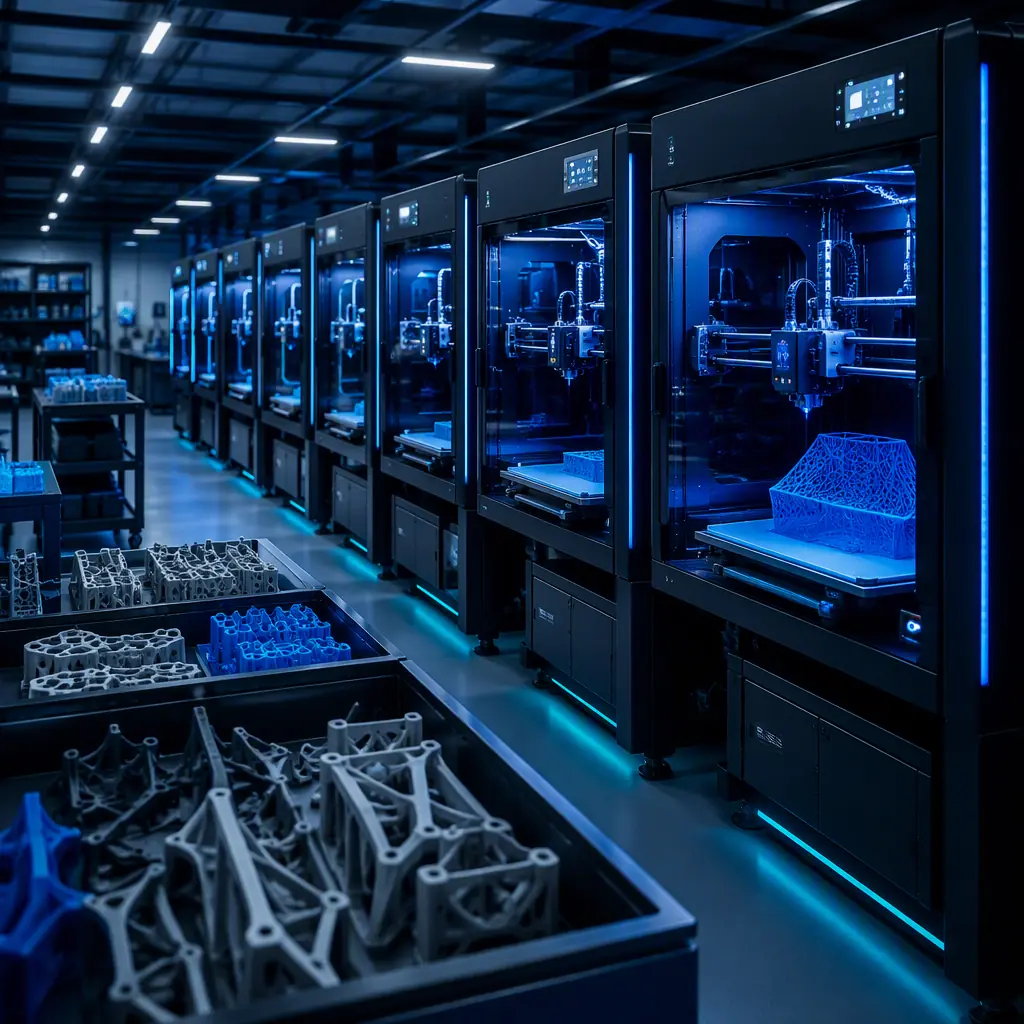
What On-Demand Actually Unlocks
On-demand production changes the economics of manufacturing two things: inventory and tooling. When a part is made only when it is ordered, you carry no finished-goods stock and no mould or die, and the cost of a small order stops being punishing.
- No minimum viable inventory. Print one part or a thousand; the setup is digital.
- No tooling amortisation. There is no mould to pay off, which makes a low-volume order economical.
- Design freedom. Every part can differ from the last without retooling, enabling mass customisation.
- Faster turnaround. A digital file can be in production within hours of approval.
The counterweight is unit cost: additive is rarely the cheapest way to make a simple part at high volume. The economics of the farm at scale are the subject of our print farm economics guide, which is where the cost floor lives.
When a Distributor Should Offer Contract Manufacturing
Adding a print service is not automatic. It makes sense when you already have the three prerequisites — capacity, qualification and relationships.
- Capacity. Machines are not fully loaded by your own work; idle hours are the raw material of a manufacturing service.
- Qualification. You can hit a spec and prove it, with a documented inspection plan (see our dimensional inspection guide).
- Relationships. Customers already buy from you, so onboarding them to a production service is a natural extension of trust.
If you lack any one of these, the service becomes a distraction. Running the farm well first — throughput, reliability, uptime — is the prerequisite in our print farm operations guide.
Qualification: What a Customer Demands Before a Production Order
Production buyers are more demanding than prototyping buyers. Before they commit repeat volume, they want evidence you can deliver the same part, to the same spec, again and again.
Qualification is also a commercial device: it is what justifies a stable price and a stable relationship, and it is what lets you decline a job you cannot actually hold. The reliability engineering that underpins "we deliver the same part every time" is the focus of our reliability guide.
Pricing a Part: The Real Cost Drivers
A quoting sheet for a manufactured part is not a guess — it is a sum of a few measurable inputs. If you cannot show the breakdown, you cannot defend the price.
Machine time is normally the biggest line, so a part that fills the bed prints far more cheaply per unit than a small part that wastes space. Pricing the hardware side of the business is the mirror image, covered in our pricing and margin guide.
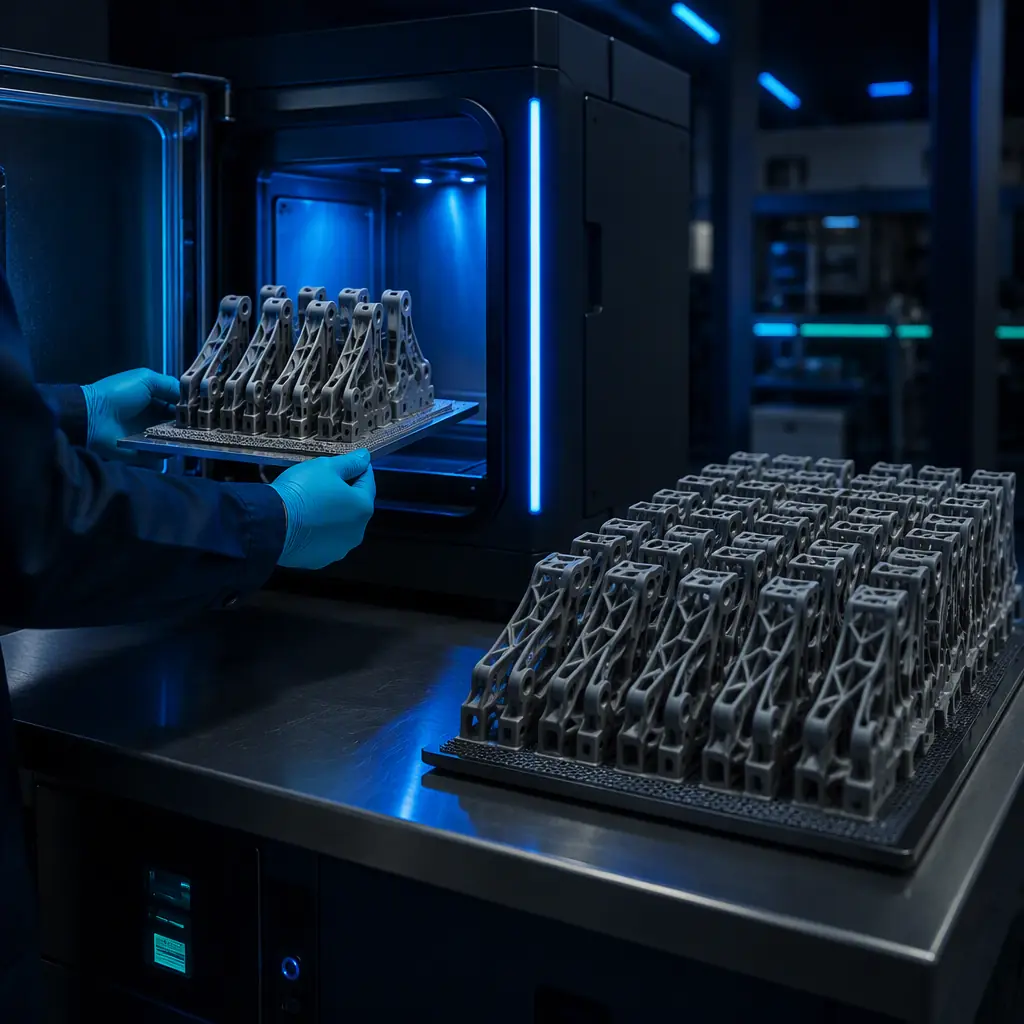
Tooling and IP: Who Owns the File?
This is the question that stops more contract-manufacturing deals than price. When a customer hands you a CAD file, you are producing their design — but you are also holding their intellectual property, and the agreement has to say who owns what and what happens to it at the end.
- File ownership. The customer’s design stays theirs; you are licensed to produce it. State this in writing.
- Confidentiality. Agree that you will not reverse-engineer, sub-contract or re-sell their part, and do not ship leftover inventory.
- Proprietary process. Your fixtures, nesting know-how and inspection method are yours — protect them as the customer protects their design.
- NDA before CAD. Exchange confidentiality before the file is sent, not after a dispute.
Getting the commercial and legal framing right up front is exactly the discipline of the OEM side of the business in our OEM and private-label sourcing guide.
Bridge, Turnkey, and Small-Batch Production
Contract-manufacturing jobs come in a few distinct flavours, and each has its own economics and risks.
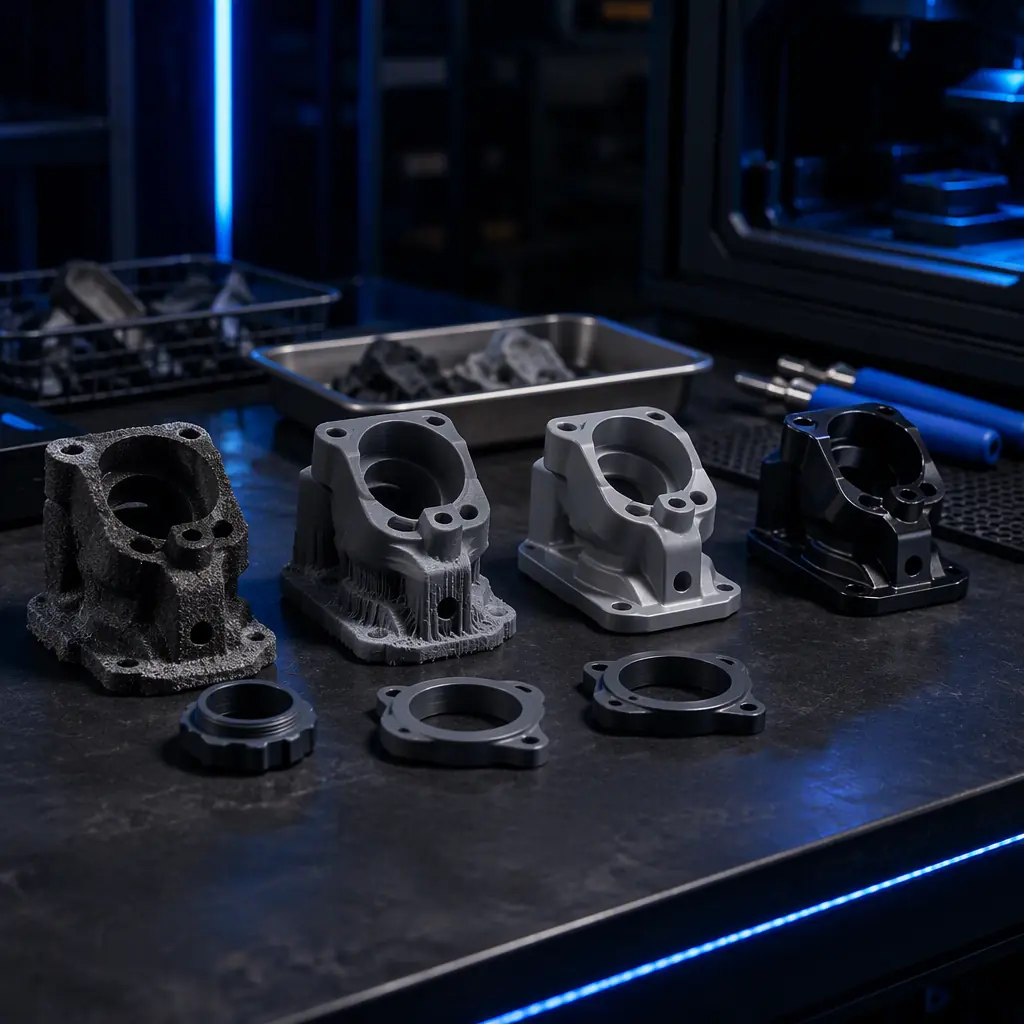
Bridge production is a great entry point — the customer needs parts now, before a mould is finished — and it rarely competes on price, only on speed. Turnkey means you deliver a finished, post-processed, inspected part, which carries a premium but demands more process control. Small batch is the long tail that builds recurring revenue. Understanding how a printed part is made usable for real service underpins all three — see our end-use functional parts guide.
Scaling From a Print Farm to a Production Service
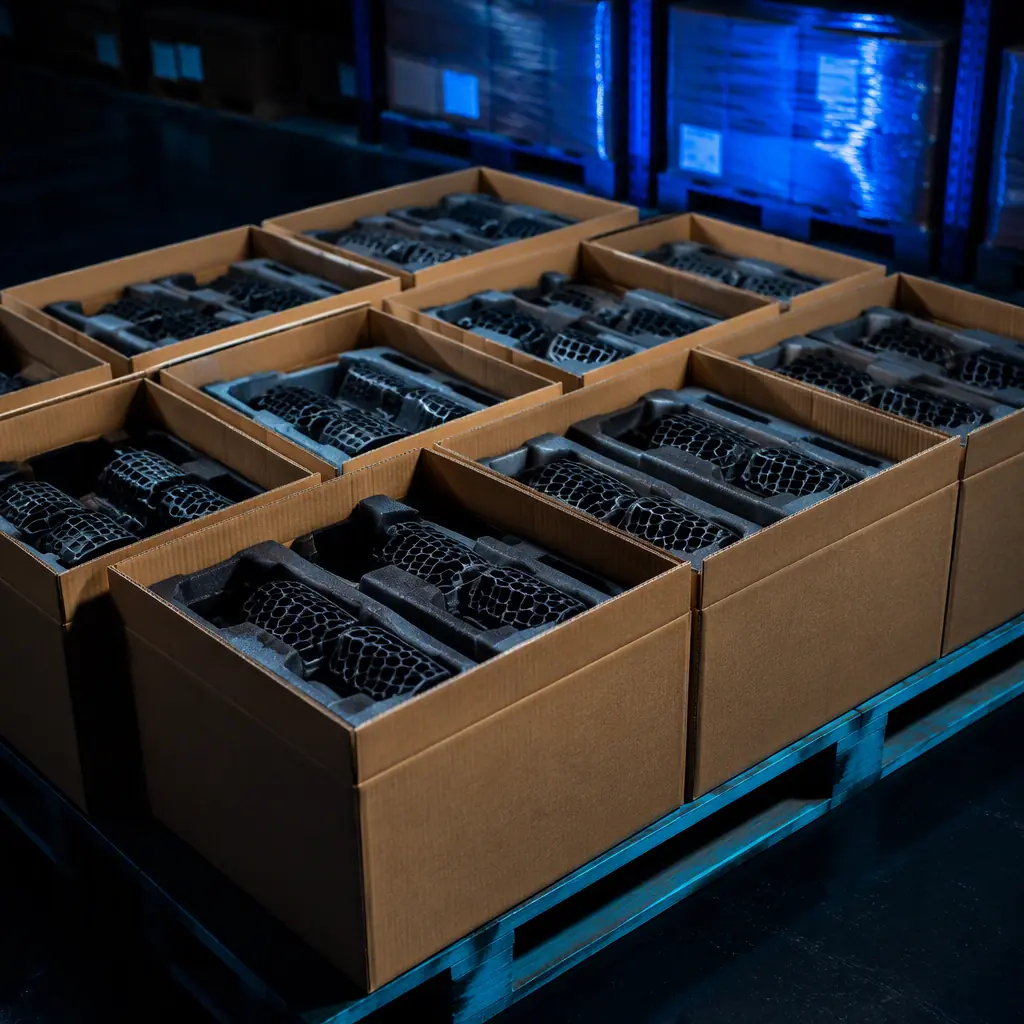
The transition is not about buying more machines; it is about changing how you operate. A farm optimises throughput; a production service optimises repeatability and accountability.
- From throughput to repeatability. The metric moves from "parts per day" to "parts per day, within spec, with records."
- From ad hoc to documented. Inspection plans, lot records and traceability replace judgement.
- From capacity to capability. You stop being measured by hours and start being measured by the tolerance you can guarantee.
- From one-off to programme. A production customer is a relationship, not a sale — and a supply-chain relationship is covered in our supply chain resilience guide.
What you're looking for: If you cannot show a per-part breakdown (material, machine time, setup, tooling, margin) and a documented inspection plan, you do not yet have a manufacturing service — you have an expensive print farm. Build the quoting sheet, qualify the process on a first article, and put file-ownership and confidentiality in writing before a production customer places repeat volume.
How Precise3D Supports Contract Manufacturing
At Precise3D we run a 3,500 sqm Shenzhen production network with four assembly cell groups, a dedicated burn-in and aging line, and a documented control plan at both incoming and outgoing QC. That capacity is the foundation for a real on-demand service: machines are calibrated to an artifact, first articles are recorded, and production parts are measured to a plan rather than judged by eye.
Our OpenSource1 and Pro X1 platforms deliver a 500×500×500 mm build volume at up to 600 mm/s with a 320°C hotend, giving the throughput and the repeatability a production programme needs. Every unit ships with CE LVD (EN 62368-1:2014+A11:2017) and RoHS (EU 2015/863) documentation, and we can supply a dimensional and material report on a production run where a customer needs the number verified. That is the difference between a shop that prints parts and a partner that manufacturers them to spec.
Reviewed by the Precise3D quality and engineering team. The economics of contract manufacturing depend on material, geometry, volume and the qualification required; always agree the per-part cost drivers, the inspection method, and the file-ownership and confidentiality terms with the customer before committing to a production programme.
Print the Hardware, Manufacture the Parts
Looking for an On-Demand Additive Manufacturing Partner?
Qualified capacity, documented inspection, and a per-part quote you can defend. Production on demand for distributors and OEMs who need parts to spec.