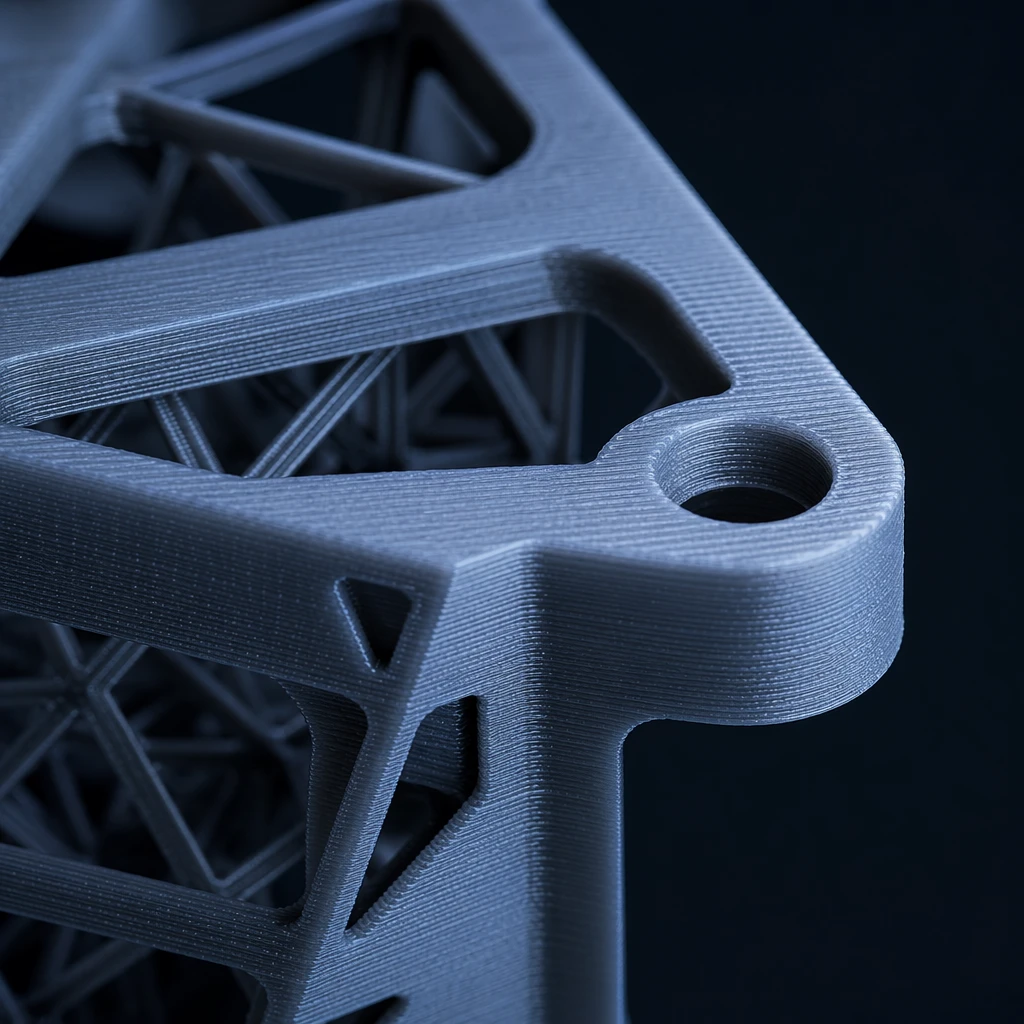
Sustainability has moved from marketing copy to procurement checklist. In 2026, distributors across Europe and North America report that retail buyers — especially in education and corporate channels — actively filter product lines by environmental criteria. The 3D printing industry has a mixed track record here: the technology enables on-demand manufacturing (less waste than subtractive methods), but the materials and energy consumption have historically been problematic. Here's what's changing.
The Filament Problem — and the Solutions
PLA is often marketed as "biodegradable," but the reality is more nuanced. PLA requires industrial composting conditions (58°C sustained for weeks) to break down — conditions that don't exist in landfills or home compost. Discarded PLA prints are effectively permanent. The industry is responding on three fronts:
Recycled PLA (rPLA). Several filament manufacturers now produce PLA from post-industrial scrap — sprues, failed prints, and manufacturing offcuts reground and re-extruded into new spools. rPLA prints identically to virgin PLA but reduces raw material footprint by roughly 60%. Precise3D's recommended filament partners all offer rPLA options at price parity with virgin material.
Bio-composite filaments. Wood-filled PLA, algae-based resins, and coffee-ground composites reduce petroleum content while adding unique surface finishes. These materials print at standard PLA temperatures (190–220°C) on any Precise3D printer with a standard 0.4mm nozzle. The aesthetic differentiation also makes them strong retail performers — customers pay a premium for "sustainable" materials with visible texture.
Filament recycling hardware. Desktop filament extruders that turn failed prints back into usable spools are entering the sub-$500 consumer market. Compatible with PLA and PETG, these devices close the loop at the user level. Distributors who bundle a recycling unit with a mid-range printer create a compelling "zero-waste" package.
Energy Efficiency in Printer Design
A typical consumer 3D printer draws 200–350W while heating and 50–80W during printing. Over a 12-hour print, that's roughly 1 kWh — comparable to running a washing machine. The Pro X1's heated bed reaches 110°C in under 3 minutes using a 24V silicone heater with aluminum substrate, cutting preheat energy by 40% compared to 12V PCB heaters. The enclosed chamber further reduces heat loss, maintaining target temperature with lower sustained power draw.
For print farms running 20+ machines continuously, the efficiency delta between a well-designed printer and a budget model compounds to hundreds of dollars per month in electricity. European distributors targeting education and enterprise should highlight operating cost per print hour — it's becoming a standard RFP field.
Manufacturing: Less Waste by Design
At Precise3D's Shenzhen facility, sustainability isn't just about the product — it's built into production. Key initiatives:
- 48-hour burn-in testing catches defects before packaging, reducing returns and the associated reverse-logistics carbon cost. Our DOA rate across all models is under 0.5%.
- Aluminum extrusion offcuts from frame production are collected, melted, and re-cast into new extrusion billets by a certified recycling partner.
- Packaging optimization uses molded pulp inserts (recyclable) instead of EPS foam (non-recyclable in most regions). Pallet density improved 22% in 2025, reducing per-unit shipping emissions.
What to Tell Your Customers
Sustainability sells, but only when it's specific. "Eco-friendly" is noise. "This printer uses 40% less energy during preheat than comparable models, ships in 100% recyclable packaging, and is compatible with rPLA filaments available at the same price as standard PLA" — that's a purchase argument. Train your sales team on the hard numbers. The distributors who can answer sustainability questions with data, not adjectives, are winning institutional RFPs.