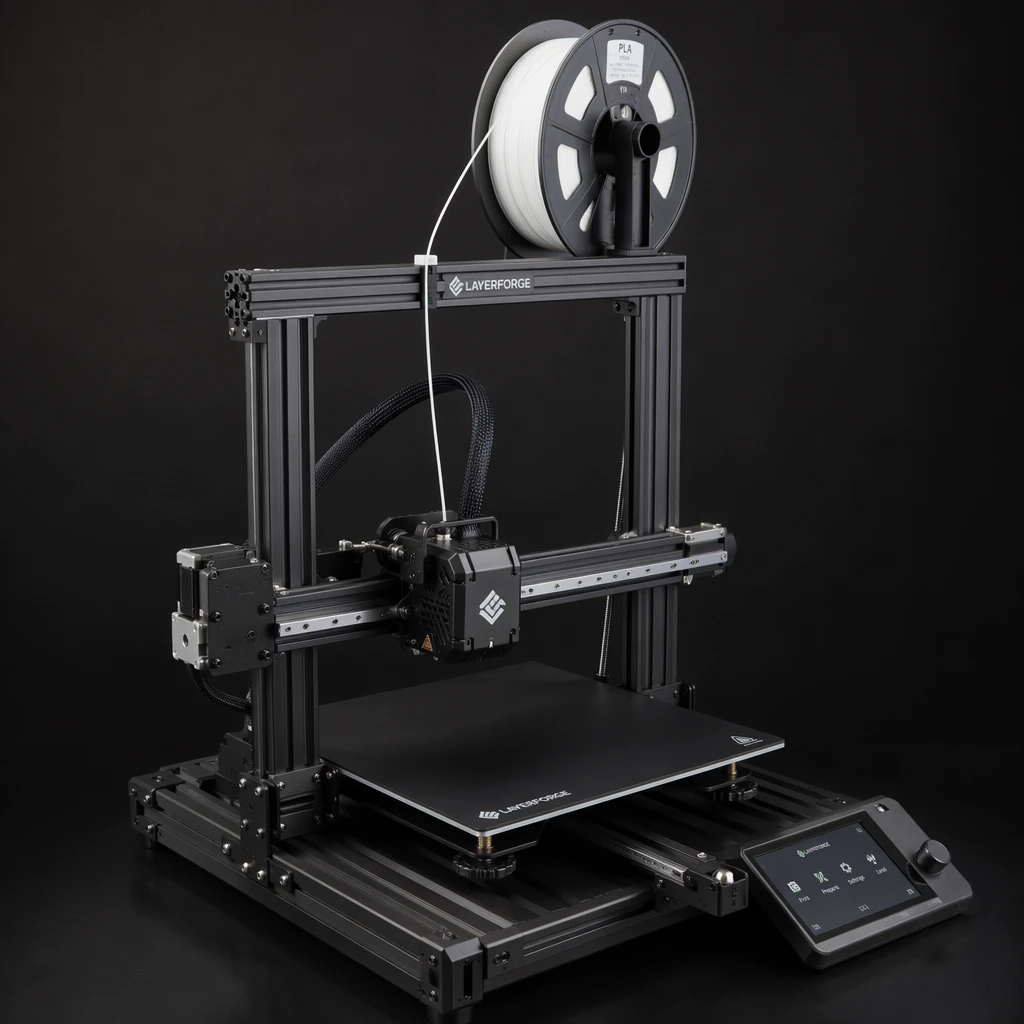
Walk into any electronics retailer and you'll see a familiar pattern: three TVs on the wall. The one on the left is small and affordable. The one on the right is massive and expensive. The one in the middle — that's where the margin lives. Consumer 3D printers follow the same psychology, but too many distributors either stock only the cheapest model or throw every SKU at the wall to see what sticks. Here's a better approach.
The Three-Tier Rule
Your 3D printer lineup should answer three distinct customer questions:
Tier 1 — Entry ($150–250 retail): "Can I try this without risk?"
This customer has never owned a 3D printer. They're curious but skeptical. They want something that works out of the box, doesn't require assembly, and won't collect dust. The Precise3D Start S1 fits here: pre-assembled, prints in 10 minutes, 220×220×250mm build volume. Margin on entry-level printers is typically 25–35%, but the real value is in accessory attachment — filament, nozzles, build plates. Bundle a starter filament pack and a spare nozzle kit and you've doubled the customer's first purchase.
Tier 2 — Mid-Range ($350–500 retail): "Is this a serious tool?"
This buyer has done their homework. They've watched YouTube reviews, read comparison spreadsheets, and probably owned an entry-level printer before. They want silent operation (so they can run it overnight), Wi-Fi connectivity, and broader material support. The Creator C1 delivers: 250×250×280mm, 300mm/s, auto-bed leveling, and under 45dB operation. Margin here is 35–45%. This is your volume driver — the model that converts online searchers into in-store purchasers.
Tier 3 — Professional ($600–900 retail): "Can this replace outsourcing?"
This customer runs a small business, a print farm, or an engineering lab. They need enclosed printing for ABS and nylon, high-temperature capability, and the speed to justify the investment. The Pro X1 at 500mm/s with a 300°C nozzle and full HEPA enclosure answers that. Margin: 40–55%. Lower unit volume, but these customers buy multiples and are loyal to their supplier.
Don't Skip the Middle
The most common mistake we see: a distributor stocks the entry-level model and the professional model — skipping the mid-range entirely. This creates a price cliff. The entry-level buyer can't justify jumping from $200 to $700, so they stay at the bottom or leave. The mid-range model earns its place not just in its own margin but as the bridge that moves customers up the value chain. Every Creator C1 sold today is a Pro X1 customer tomorrow.
Accessory Strategy: The 30% Rule
Target accessories at 30% of printer revenue. The minimum bundle we recommend:
- 2× filament spools (PLA starter pack)
- 1× spare nozzle kit (hardened steel for abrasive filaments)
- 1× spare build plate (PEI smooth/textured dual pack)
- 1× toolkit (scraper, pliers, nozzle wrench)
Precise3D provides retail-ready accessory packaging with UPC codes, multi-language quick-start cards, and planogram recommendations for shelf placement.
Regional Considerations
North American buyers prioritize speed and build volume. European buyers care about noise levels and enclosure safety (CE certification is table stakes). Southeast Asian markets value pre-assembled, out-of-box experience above raw specs. Stock your lineup accordingly — and Precise3D's OEM program can customize firmware defaults and packaging per region without changing the hardware.